
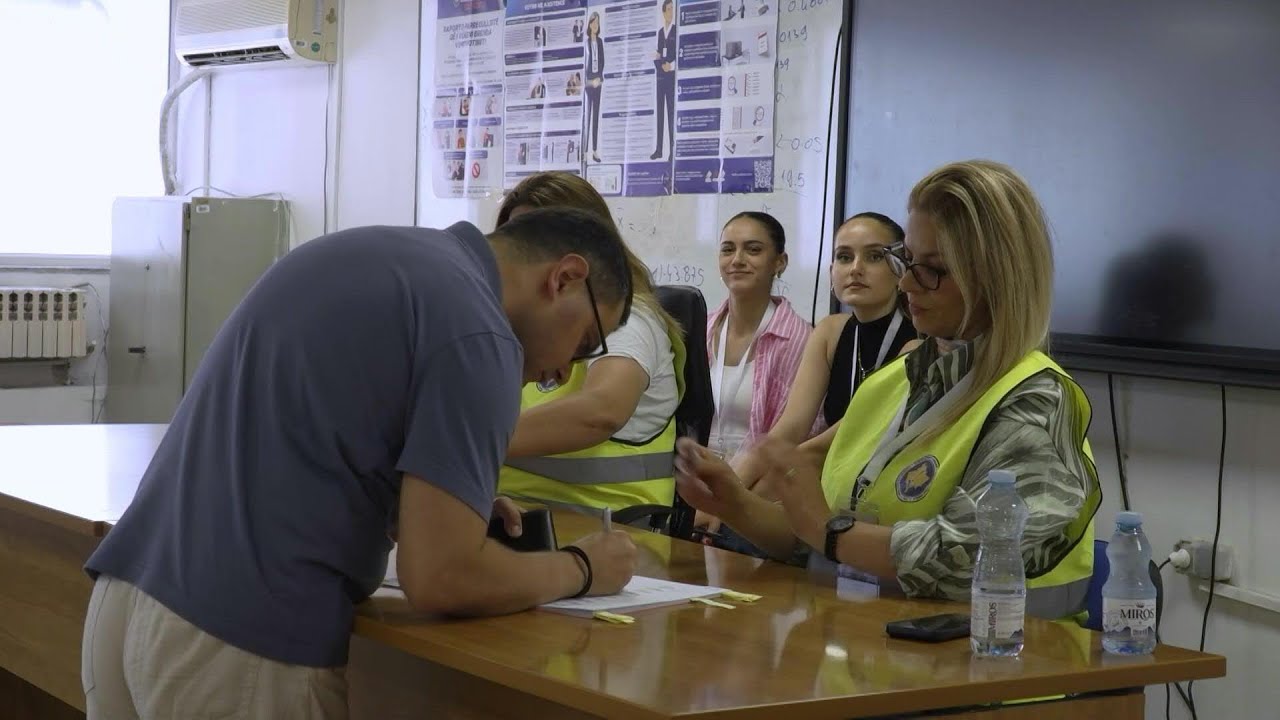
Voters in Kosovo headed to the polls on Sunday for the country’s third parliamentary election in just over 18 months, as mounting public frustration and political fatigue grip Europe’s youngest nation amid a grinding institutional deadlock. The snap election was triggered after parliament failed to elect a new president in April, automatically dissolving the legislature and forcing another vote despite inconclusive parliamentary elections in February 2025 and a second election in December that still produced no stable government. The prolonged crisis has left Kosovo without a fully functioning administration for much of the past year, paralyzing parliament, delaying key reforms, and putting at risk roughly €1 billion in loans from the European Union and World Bank that must be ratified in the coming months.
Prime Minister Albin Kurti’s Vetevendosje party, which topped the February vote with 42 percent but fell short of a 61-seat majority, has been unable to secure coalition partners or consensus on a president. Opposition parties, including the Democratic Party of Kosovo and the Democratic League of Kosovo, accuse Kurti of seeking to consolidate control over all institutions, while Kurti blames them for creating an “artificial crisis” and boycotting the presidential vote. The deadlock has fueled disillusionment among the country’s two million citizens, many of whom say they expect little to change. “Enough is enough,” retired teacher Gezim Selimi told AFP after voting in Pristina, adding that parties should “work for Kosovo, instead of wasting time fighting for power through one snap election after another”. Others, like computer programmer Miranda Fazliu, said they would not vote because “it’s frustrating to see that the election will yield the same result”.
Analysts warn the cycle has become systemic, with lawmakers unable to bridge deep divides despite pressure from Brussels to stabilize institutions and advance EU integration. European Council President Antonio Costa said this week that “Kosovo needs strong, stable and functional institutions,” noting that “the European Union can support Kosovo, but it cannot do Kosovo’s homework”. The political uncertainty has already taken economic and diplomatic tolls, worsening conditions in a country where living standards remain among the lowest in Europe and many young people continue to emigrate. Polls opened at 7 am with turnout at 8.27 percent by 11 am, broadly in line with February’s final turnout of just 40.6 percent, reflecting widespread apathy. With opinion polls not published, the outcome remains uncertain, but many voters and experts expect the deadlock to persist unless parties reach a compromise to form a government and elect a president before the April deadline.