
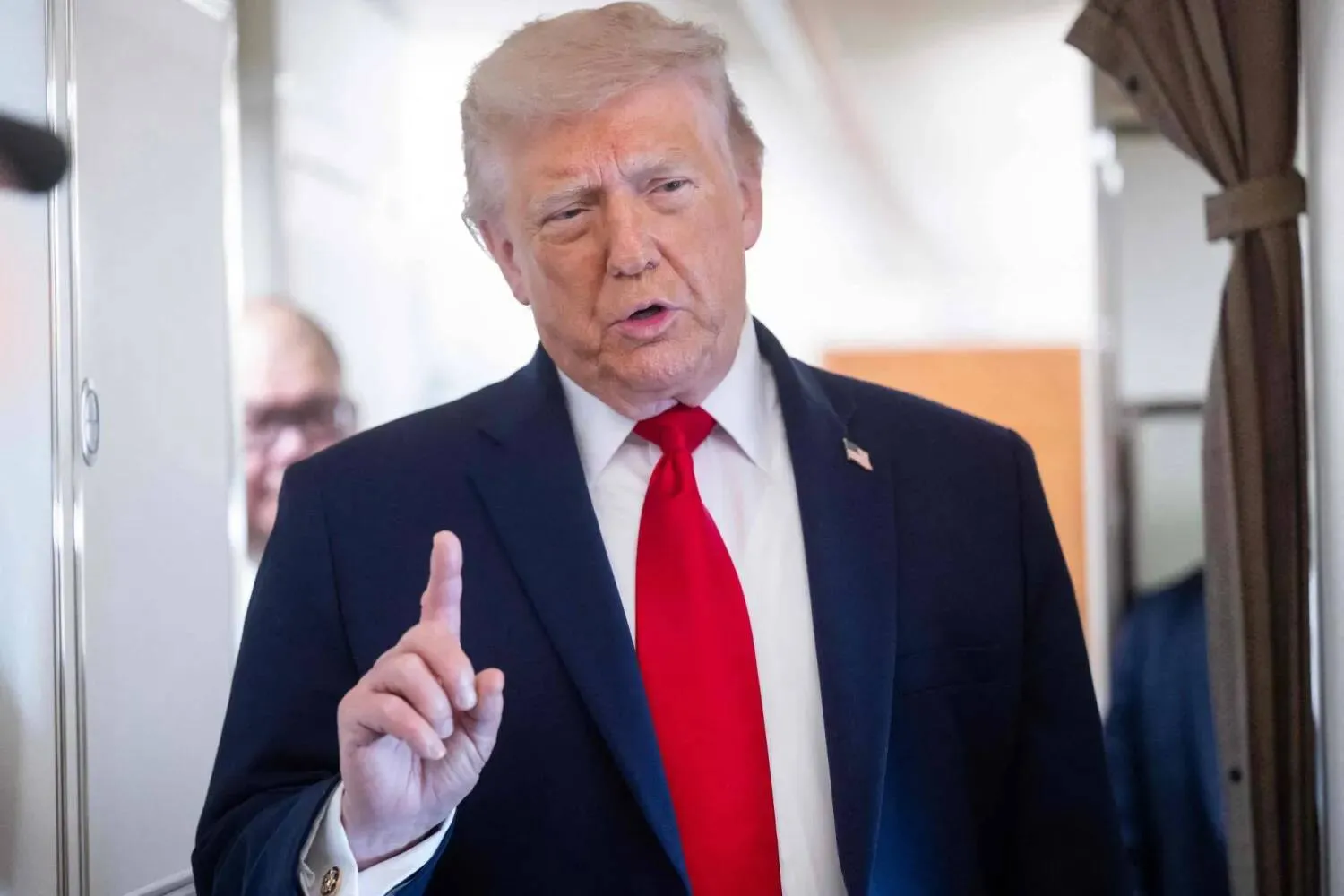
US President Donald Trump said on Friday that Iran still retains about 21 to 22 percent of its missile arsenal following recent US and Israeli strikes, emphasizing that while Tehran’s capabilities have been significantly degraded, the country remains armed with a substantial number of weapons. Speaking in an interview with NBC News’ _Meet the Press_, Trump asserted that the United States had “totally destroyed” much of Iran’s military apparatus, including most drone factories and missile manufacturing areas, but acknowledged that Iran still has capacity. “They still have some missiles, they have some drones. I would say, percentage wise, maybe 21, 22 percent of their missiles,” he said, adding that “it’s a lot of missiles, but it’s not what it was when we first attacked”.
The figure marks an increase from the 18 percent estimate Trump gave in May, and comes amid a week in which Iran fired dozens of missiles toward regional neighbors despite a fragile ceasefire. Iran’s military claimed it had launched “warning missiles” at two US destroyers in the Gulf of Oman, a statement the US military promptly denied. Two days earlier, Kuwait said it intercepted 30 ballistic missiles in what it called “heinous Iranian aggression”.
Trump told NBC that he knows “almost to the number” how many missiles and drones remain in Tehran’s hands, though he declined to provide exact figures. “We know where their drones are, and we know where their drone factories are. Most of the drone factories have been knocked out… and most of the missile manufacturing areas have been knocked out,” he stated.
The assessment contrasts with US intelligence briefings provided to lawmakers last month. According to _The New York Times_, those briefings indicated that Tehran had restored operational control over 30 of its 33 missile installations along the Strait of Hormuz and still holds roughly 70 percent of its pre-conflict missile inventory.
Trump predicted a rapid end to regional disruptions, particularly in the Strait of Hormuz, and said Iran has “got no choice” except to reach an agreement. “They’re strong, they’re proud, there are things they never thought they’d be doing that they’re going to have to do,” he told NBC. He also claimed that when tensions are resolved, oil prices would drop “maybe even lower than they were”.