
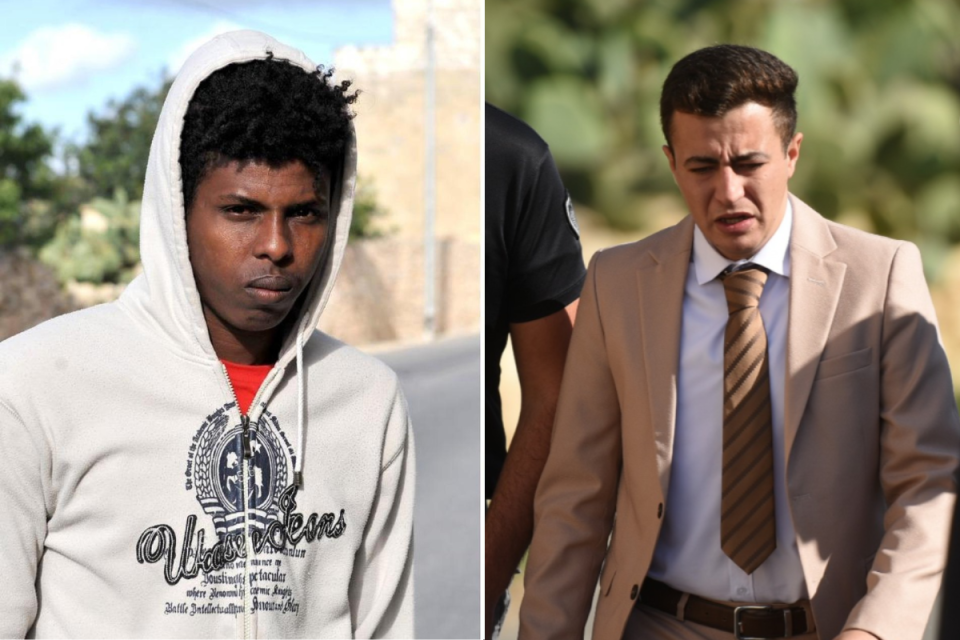
More than seven years after the racially motivated killing of Ivorian father-of-two Lassana Cisse Souleymane, who was shot dead while walking home along Triq il-Gebel between Hal Far and Birzebbuga on 6 April 2019, a Maltese jury has acquitted former Armed Forces of Malta soldier Lorin Scicluna of his murder, a verdict that has ignited a national debate about the jury system, investigative failures and racism in Malta, as discussed in this week’s Times Talk with court correspondent Clara Farrugia. Scicluna, now 29, was found not guilty on 1 November 2026 by an eight-to-one majority after a two-week trial before Madam Justice Natasha Galea Sciberras that began on 19 October, with jurors also clearing him of the attempted murders of Mohammed Jallow from The Gambia and Ibrahim Bah from Guinea who were shot and injured on the same night, and of the attempted murder of May Malimi, a Chadian national who was seriously injured in a separate hit-and-run in February 2019 on the same Hal Far road.
However, the jury did convict Scicluna on two of the nine charges by narrower margins, finding him guilty by six votes to three of grievously injuring Malimi in that February attack where he and Francesco Fenech deliberately struck the migrant with a car, and unanimously guilty of driving a vehicle without registration plates, with the court hearing during the trial that Scicluna had admitted that he and his companions used to drive around Hal Far looking for Black people to harass, allegedly influenced by racist and fascist ideologies including that of Norman Lowell, evidence that prosecutors argued showed a pattern of racial hatred but that the defence challenged on grounds of police handling and admissibility. The Times Talk episode examines how the prosecution struggled to link forensic evidence and witness testimony to the specific charge of murder, how jurors posed questions about intent and identification, and why the jury system itself, which is rare in Europe for murder trials and still used in Malta, is now under fire, with figures such as Matthew Caruana Galizia and NGO Repubblika calling for an end to jury trials in homicide cases and for a comprehensive review of the Criminal Procedure Code.
What comes next is far from over, as Scicluna remains in custody pending sentencing submissions on 4 November for the two convictions, while separate criminal proceedings against his co-accused Francesco Fenech, also a former soldier, are still pending and must be assessed independently under the presumption of innocence, and as Home Affairs Minister Glenn Bedingfield and Police Commissioner Angelo Gafa face renewed scrutiny over investigative mistakes that have led to a series of high-profile acquittals, including that of Yorgen Fenech in the Daphne Caruana Galizia case, prompting calls from more than twenty civil society organisations and the African Media Association Malta for stronger hate crime protections, with the central question they pose being who will protect Black people in Malta if an admitted pattern of hunting migrants does not result in a murder conviction.