
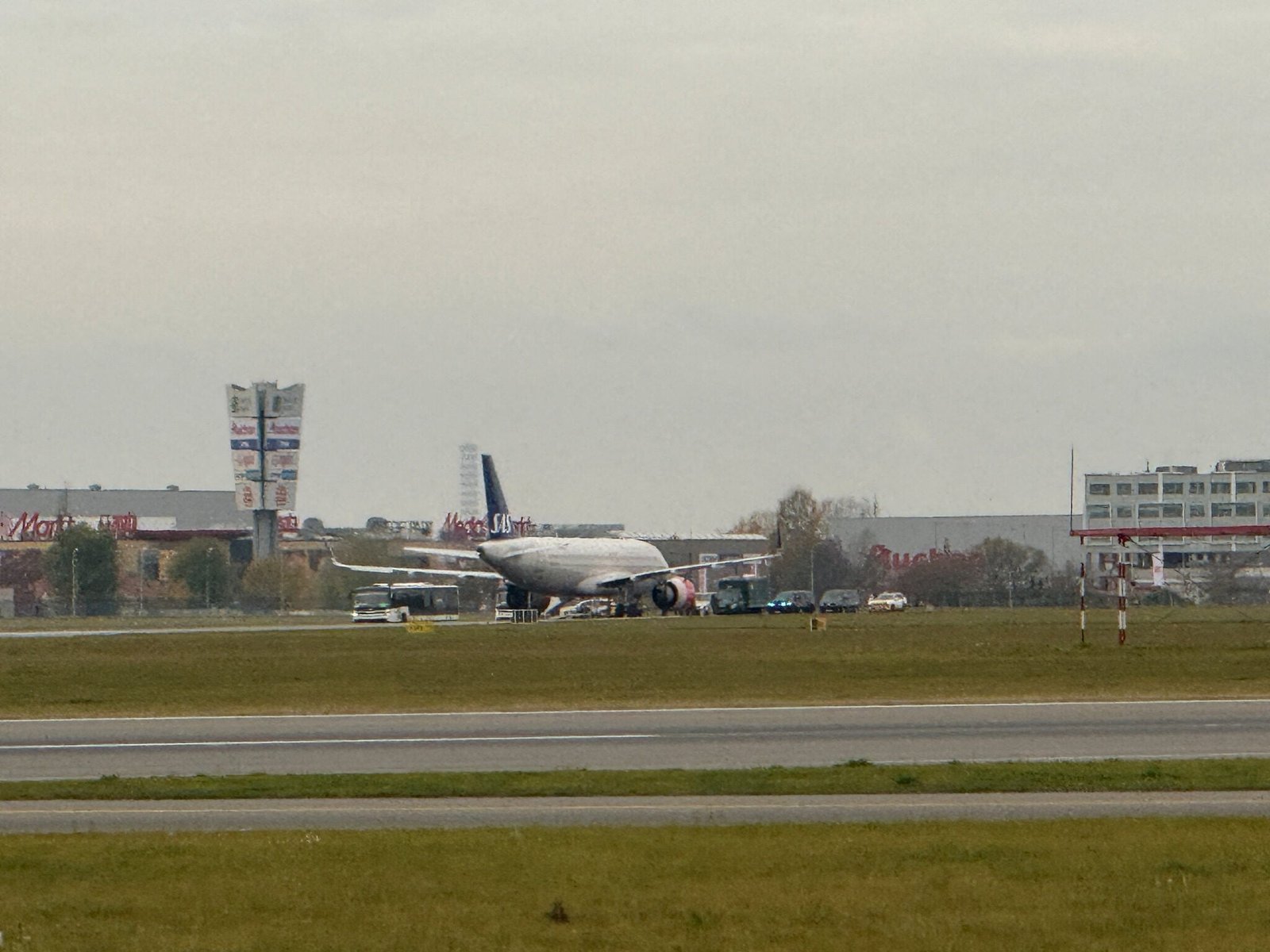
At least four commercial flights across Europe were thrown into chaos on Tuesday after a coordinated wave of hoax bomb threats forced emergency protocols, diversions and the temporary closure of an airport, though all aircraft landed safely and no explosives were found, authorities confirmed. The disruption, which followed a similar scare on Monday, targeted two flights bound for Warsaw, including Scandinavian Airlines flight SK751 from Copenhagen and LOT flight LO286 from London Heathrow carrying 181 passengers, with the SAS aircraft managing to land normally at Warsaw Chopin Airport where it was isolated on a closed runway for inspection, while the LOT Boeing 737 MAX was diverted at 08.54 GMT to Warsaw Modlin Airport, the capital’s secondary airport, which was briefly shut down as bomb disposal experts, counter terrorism units and border police swept the plane and held passengers and crew in arrival halls pending clearance.
In a third incident, Spanish airport operator Aena confirmed that an emergency protocol was activated after a bomb alert was received for Ryanair flight FR from Manchester to Murcia in southeastern Spain carrying 114 passengers, prompting Civil Guard officers to cordon off parts of Murcia International Airport before the aircraft landed without incident and was declared safe after thorough checks, while in a fourth case a Wizz Air flight from Bergamo in Italy was inspected immediately after landing at 09.10 GMT in Sofia, with the Bulgarian Interior Ministry telling AFP that counter terrorism teams were deployed after an email threat was received. The wave of threats came just a day after NATO’s air defence alert service scrambled fighter jets when a Wizz Air flight from London Luton to Sofia was forced to make an unscheduled emergency stop in Budapest after a bomb threat mid-flight, and follows a pattern seen last month when on 19 October an Austrian Airlines flight from Tel Aviv to Vienna had to reroute to Bulgaria for the same reason. Aviation security officials across Poland, Bulgaria and Spain said investigations are underway into the source of the emails and calls, with early indications pointing to hoaxes designed to cause maximum disruption, as airports reopened and normal operations resumed by Tuesday evening.