
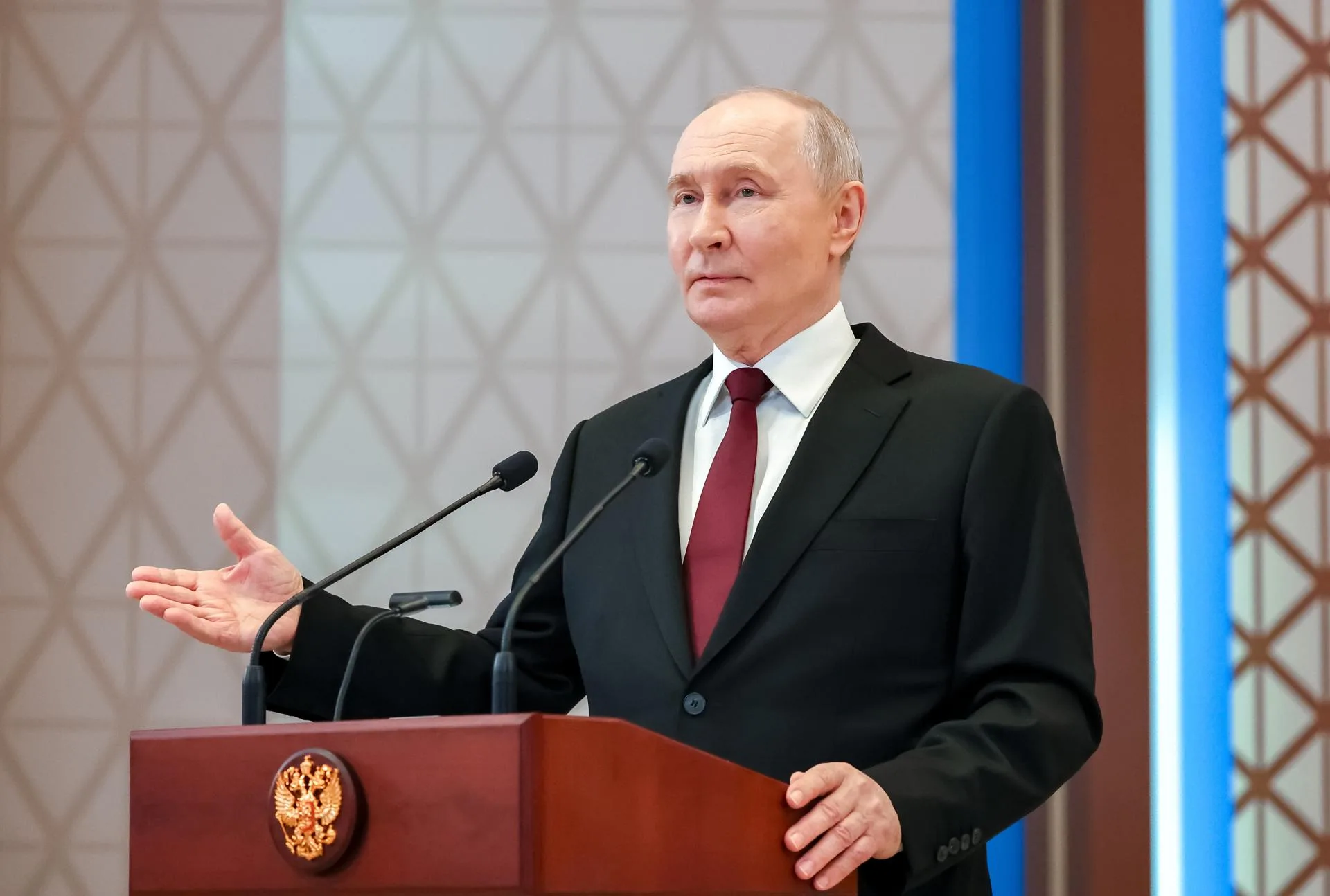
President Vladimir Putin and three Russian-allied leaders called on Armenia to hold a referendum on EU membership “as soon as possible” on Friday, May 29, 2026, escalating pressure on Yerevan over its deepening ties with Brussels. Speaking at a press conference in Astana, Kazakhstan, during a Eurasian Economic Union summit, Putin said it was time for Armenia to choose between the European Union and the Russian-led Eurasian Economic Union, insisting it was “impossible to reconcile the two”. He cited Prime Minister Nikol Pashinyan, saying Pashinyan himself had said it would be right to hold a referendum on where Armenia should position itself and that Moscow “would like this to be done as soon as possible”. In a joint statement issued earlier at the summit, Putin and the leaders of Belarus, Kyrgyzstan and Kazakhstan warned that Armenia’s moves to join the EU posed “significant risks” to the economy of EAEU member states and shared “the position on the need to hold a national referendum in the Republic of Armenia as soon as possible on joining the European Union or remaining part of the Eurasian Economic Union”.
Armenia is formally allied with Moscow and remains a member of the EAEU, but has been building ties with the European Union for years amid frustration over Russia’s perceived failure to protect it during conflicts with neighboring Azerbaijan. The Caucasus country froze its security ties with Moscow in 2024 and last year passed a law declaring its intention to seek EU membership, further angering Russia. Putin argued that participation in both systems simultaneously would be difficult to sustain, stating that being in a customs union with the EU and the EAEU “is simply impossible by definition”. He drew a parallel to Ukraine, noting that the crisis there began when Kyiv sought closer integration with the EU.
Armenia did not immediately comment on the latest move, though Putin added that “whatever decisions are made, this will not damage our humanitarian ties, it will not damage our political ties”. Pashinyan has previously said a referendum would be held “at the moment when there is an objective need for it” and that his assessment is there is “simply no such objective necessity” currently. He has described Armenia’s policy as one of “diversification,” pursuing ties with both Russia and the West while maintaining that Armenia treats its EAEU partners and participation with “great respect”. The pressure comes ahead of Armenia’s parliamentary election in June, which pits Pashinyan’s party against several pro-Russian opposition parties, with the country’s geopolitical direction a central campaign issue.