

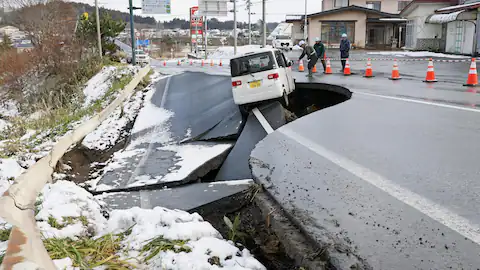
A powerful 7.4-magnitude earthquake struck northern Japan, triggering immediate alerts across the region and prompting authorities to issue a tsunami warning for coastal areas. The tremor was strong enough to be widely felt, shaking buildings and disrupting daily activity as residents responded to emergency protocols. Seismological agencies confirmed the magnitude and depth shortly after the initial shock, noting that quakes of this scale carry a risk of significant aftershocks and potential coastal impacts.
Emergency services moved quickly to assess damage and activate evacuation guidance for low-lying areas within the tsunami warning zone. Rail services and some road networks were temporarily halted for safety checks, while ports and harbors suspended operations as a precaution. Residents in the affected prefectures were urged to move to higher ground and stay away from shorelines until officials confirmed the threat had passed. Broadcasting networks interrupted regular programming to relay updates from the meteorological agency and local government.
The full scope of damage and any casualties is still being determined as inspection teams reach more remote locations. Authorities are monitoring wave activity and aftershock patterns to decide when warnings can be lifted and infrastructure can safely resume normal operations. The quake adds to Japan’s long history of major seismic events, reinforcing the importance of early warning systems and community preparedness in a region where tectonic activity remains constant.