
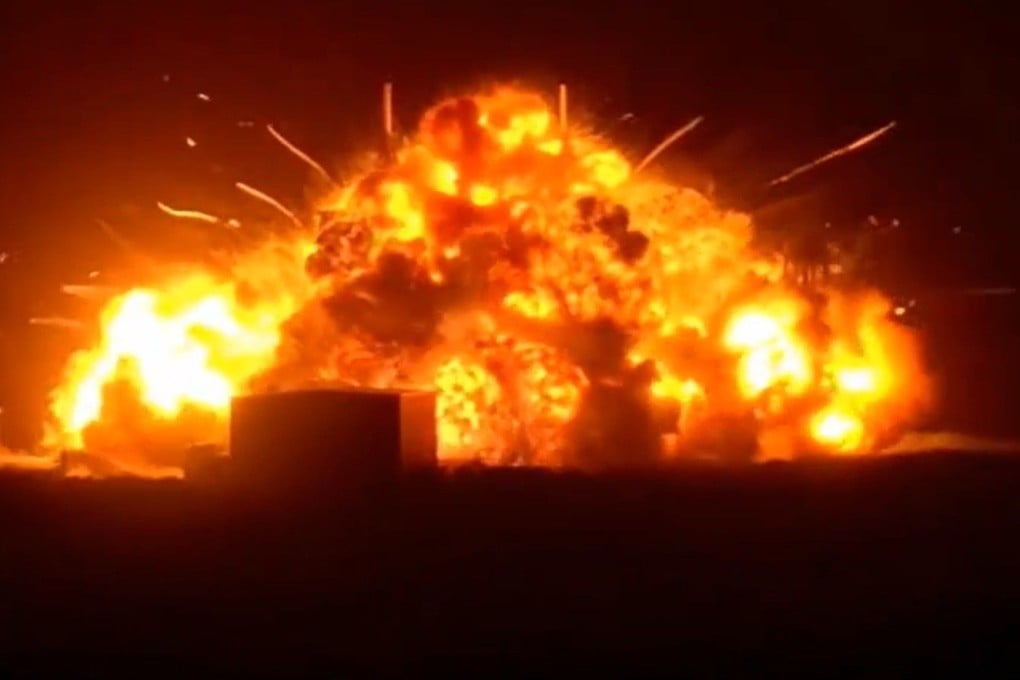
An uncrewed Blue Origin New Glenn rocket erupted in a massive fireball on the launch pad Thursday night, May 28, 2026, during a hot-fire test at Cape Canaveral Space Force Station, dealing a major setback to Jeff Bezos’ space venture as it works to close the gap with Elon Musk’s SpaceX. Video captured by NASASpaceflight showed the 321-foot-tall New Glenn igniting around 9 p.m. ET before exploding into flames that lit the night sky orange and sent a towering plume of smoke billowing over Florida’s Space Coast. The blast was powerful enough to rattle homes in Cape Canaveral and Cocoa Beach, with residents reporting their windows shaking and the sky “going completely bright” as debris rained down.
Blue Origin confirmed it experienced an “anomaly” during the hot-fire test, where all seven engines of the first-stage booster are fired while the rocket remains clamped to the ground. The company said all personnel were accounted for and safe, with no injuries reported by Space Force officials. Bezos posted on X that it was “too early to know the root cause” but added, “Very rough day, but we’ll rebuild whatever needs rebuilding and get back to flying. It’s worth it.”
The rocket was being prepared for its fourth flight and was slated to carry 48 satellites for Amazon’s Leo broadband constellation into low-Earth orbit as soon as June 4, though Amazon confirmed the satellites were not on board at the time. The explosion destroyed much of Launch Complex 36, including the strongback support structure and one of the lightning towers, and caused major damage to the horizontal integration building where rockets are assembled. Because this was the only site from which the heavy-lift New Glenn can launch, the incident threatens to delay roughly a dozen cargo missions planned through the end of the year.
The failure comes just two days after NASA awarded Blue Origin a $188 million contract to deliver rovers to the moon’s surface using its uncrewed Mark 1 cargo lander, part of the Artemis program. NASA Administrator Jared Isaacman said the agency would work with Blue Origin to investigate, assess near-term mission impacts, and “get back to launching rockets,” noting that “spaceflight is unforgiving, and developing new heavy-lift launch capability is extraordinarily difficult”. The explosion follows an April incident in which New Glenn left a satellite in the wrong orbit due to engine failure, and it further complicates Blue Origin’s timeline for lunar landers and commercial launches intended to compete with SpaceX’s Falcon fleet and Starship.
The FAA noted the test was not within the scope of FAA-licensed activities and said there was no impact to air traffic. Emergency crews remained on scene more than an hour later, though officials confirmed there was no threat from fumes. The Space Force warned the public not to touch any debris that may wash up on beaches, as it could be hazardous. Blue Origin said it will provide updates as the investigation continues, while Bezos and Isaacman both emphasized the need to rebuild and learn from the failure before returning to flight.