
Lebanon’s culture minister Ghassan Salame warned Friday, May 29, 2026, that ongoing Israeli strikes across southern Lebanon are placing the country’s heritage sites in “serious danger”, with bombs falling very close to the UNESCO World Heritage ruins of Tyre and the medieval Beaufort Castle directly hit. Salame told AFP that the intensification of battles means these sites are at serious risk, noting that several bombs fell on the Crusader-era fortress overlooking Nabatieh, a strategic site that was held by Israeli troops for 18 years until 2000. The castle, also known as Qalaat al-Chakif, sits about 15 kilometers from the Israeli border and towers over the Litani River, making it a focal point in the fighting.
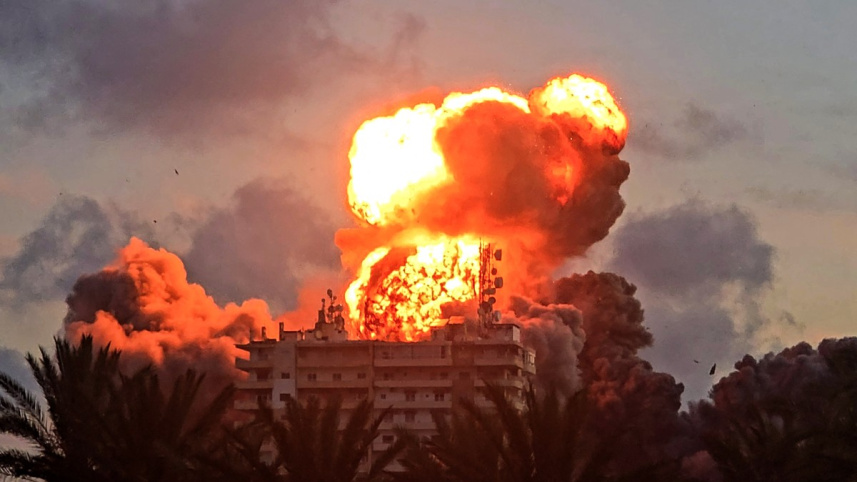
The warnings came as Israel launched strikes across south Lebanon Saturday, May 30, 2026, after ordering evacuations from more than a dozen locations, a day after Prime Minister Benjamin Netanyahu said Israeli forces had pushed even deeper into Lebanese territory. Lebanon’s state-run National News Agency reported artillery fire near Beaufort castle and strikes in the south, including near the archaeological areas of Tyre. In Tyre, one of the world’s oldest continuously inhabited cities, the Israeli military warned on May 28 it would target a building very close to the city’s archaeological area, and AFP footage later showed a fireball followed by smoke as a strike hit the district.
Prime Minister Nawaf Salam said on X that “nothing can justify the ongoing attacks on the Tyre and Nabatieh regions and the destruction of their historical landmarks”, calling the campaign “collective punishment”. He accused Israel of “implementing a policy of total destruction of cities and towns” and trying to “uproot Lebanon’s memory and erase the people’s history”. President Joseph Aoun and Salam met Saturday and agreed to intensify contacts to put an end to the condemned Israeli practices ahead of US-brokered talks with Israel scheduled for June 2 and 3.
Tyre, a UNESCO World Heritage site since 1984, contains Roman baths, a colonnaded road, a Roman residential quarter, a 12th-century cathedral, a 2nd-century hippodrome, and the El-Bass necropolis. Baalbek, another World Heritage site, has also seen airstrikes land within 500 to 700 metres of its citadel, with Lebanese officials warning that shockwaves and smoke could damage the archaeological stones. UNESCO has already confirmed damage to Tyre after bombardment landed just meters from the Al-Bass archaeological complex. On April 1, 2026, UNESCO granted provisional enhanced protection to 39 cultural sites across Lebanon under the 1954 Hague Convention, giving them the highest level of immunity against attack and military use.
Archaeologists warn that even when sites are not directly targeted, proximity to explosions can cause severe damage. Ground vibrations can crack ancient masonry, destabilise columns, and lead to total collapse over time as micro-fractures accumulate. Decorative elements, inscriptions, mosaics and archaeological layers are also at risk from debris and shrapnel. Heritage NGOs report that unregistered local sites, including historic souqs, cemeteries, mosques and ancestral homes, have already been destroyed in villages like Yaroun and Nabatieh.
The strikes come amid a fragile ceasefire that was supposed to take effect on April 17, 2026, but has never been observed, with both sides accusing each other of violations. Lebanon was drawn into the wider regional war in early March when Hezbollah launched rockets at Israel over the killing of Iran’s supreme leader in US-Israeli attacks, prompting Israeli strikes and a ground invasion.