
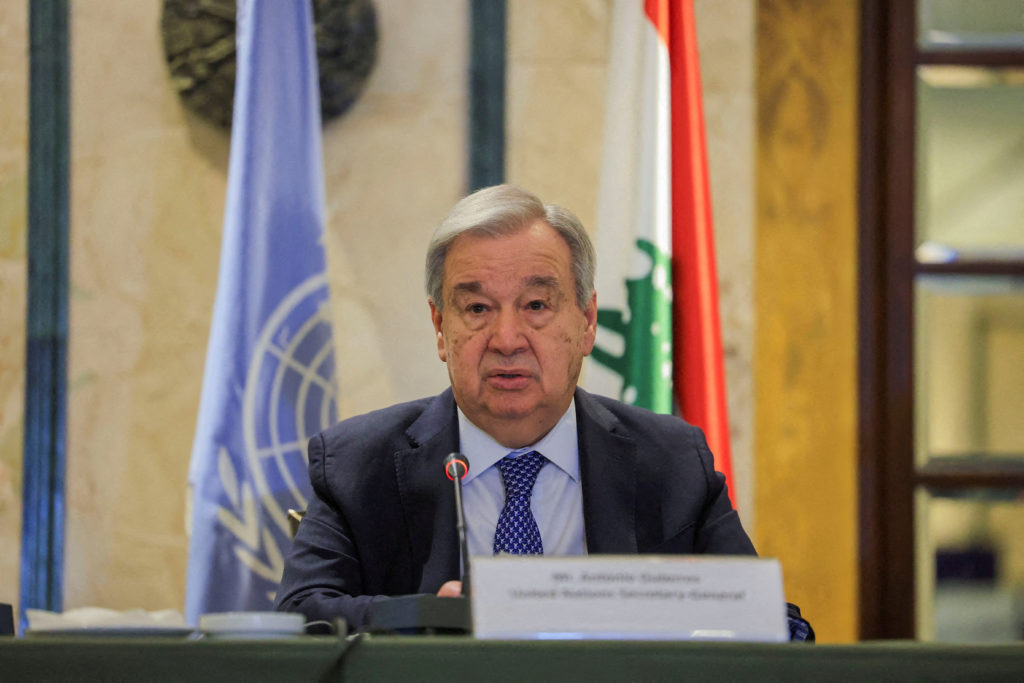
The United Nations on May 29, 2026, added Israel and Russia to a UN blacklist of countries suspected of committing sexual violence in conflict zones, marking the first time either nation’s armed or security forces have been placed on the annual registry. The designation came in UN Secretary-General Antonio Guterres’ annual report to the Security Council on conflict-related sexual violence, which goes a step further than last year when both Israel and Russia were put “on notice” that they could be added to the list of parties “credibly suspected of committing or being responsible for patterns of rape or other forms of sexual violence.” The report contains harrowing descriptions of abuses at the hands of Israeli and Russian armed and security forces, including cases verified by the UN dating back to 2023 of sexual violence “including as a form of torture” against 14 men, seven women, nine boys, and one girl in the Gaza Strip and the West Bank. Violations include rape with an object, gang rape, physical violence against the genitals, forced nudity, and body searches conducted “without apparent security justification.” The perpetrators are identified by the UN as members of the Israeli military, security forces, and prison services. For Russia, the report highlights sexual violence in occupied Ukrainian territories and within Russia itself, perpetrated by armed forces and prison services, particularly against prisoners of war. Investigators verified 310 cases of conflict-related sexual violence in Russia and in occupied Ukrainian territories, with the overwhelming majority of victims being men.
UN investigators noted they faced “continued denial of access” from authorities in both countries, and the cases verified are indicative of multi-year trends but are not comprehensive given the denial of access to Israeli detention centres. The blacklist, published annually, includes dozens of state and non-state groups credibly suspected of having engaged “systematically” in sexual violence in countries such as Sudan, Haiti, the Democratic Republic of Congo, Myanmar, Syria and Mali. Hamas, whose October 7, 2023, attack on southern Israel triggered the war in Gaza, was already on the list, and ISIS is also included. Israel’s UN Ambassador Danny Danon said ranking Israel with the militant group marked a “new low” and called it a “political decision disconnected from the facts and reality.” He stated Israel had responded in detail to each allegation and invited UN representatives to visit, but they chose not to do so. Pramila Patten, the UN official who authored the report, said she made several requests in writing for details on preventive measures but did not get any response on the substantive aspects, and noted disagreements about the scope of visits led to suspension due to Israel’s war on Gaza.
Following the announcement, Israel’s Foreign Ministry said it would sever all ties with UN Secretary-General Antonio Guterres and his office until a new secretary-general is appointed, describing the UN as a “politicized and corrupt organization” that abandoned its founding principles and systematically targets Israel. Israel denied all allegations that entities and personnel committed acts of sexual violence and accused the UN of creating a “fake symmetry” between Israel and Hamas. Russia’s UN Ambassador Vassily Nebenzia called the allegations unsubstantiated and said Russia is documenting Ukrainian treatment of Russian prisoners of war. Being added to the list does not automatically carry specific punitive measures such as sanctions, although public naming and shaming can cause significant reputational damage, and those repeatedly listed are barred from UN peacekeeping operations.