
The World Health Organization has issued urgent warnings about critical medical shortages in Gaza, stating that hospitals and primary healthcare centres are being prevented from functioning properly due to severe restrictions on essential supplies and equipment. Dr Reinhilde Van de Weerdt, the WHO’s representative in the occupied Palestinian territories, said most facilities in the Gaza Strip are only partially operational while none of the hospitals are fully functional, with one of the key reasons being critical shortages of medical supplies. The WHO emphasized that internationally recognized lists of essential medicines are what is needed, yet bureaucratic processes and access restrictions continue to block items that Israel argues are “dual use” and could potentially be used for a military purpose. Examples include a prefabricated hospital that has sat waiting for months in Jordan, and laboratory equipment without which diseases cannot be diagnosed and potential outbreaks cannot be detected. WHO officials stressed that without oxygen concentrators, critically ill patients die.
Stocks of essential medicines, trauma supplies and surgical consumables are critically low, and fuel shortages continue to limit hospital operations. Supplies of some items such as gauze and needles have already run out, according to WHO’s regional director Hanan Balkhy, citing information from Gaza’s Health Ministry. Although the Kerem Shalom border crossing was reopened for the gradual entry of humanitarian aid, only a maximum of 200 out of the 600 daily trucks that need to go in are entering, which WHO says is not enough to support the needs in Gaza. Half of Gaza’s 36 hospitals are still shut after the Israel-Hamas war ended in a shaky ceasefire on October 10, 2025, and those that remain open are struggling to sustain critical services such as surgery, dialysis and intensive care.
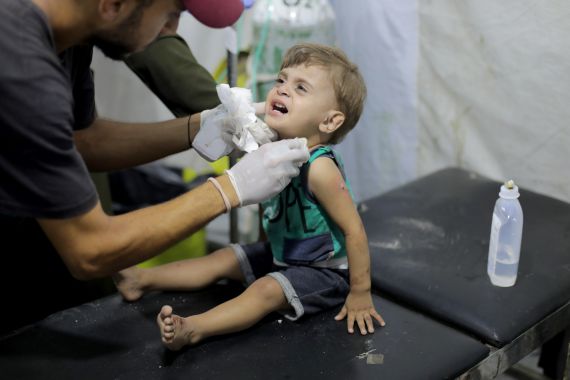
The impact on patients is acute. UNICEF reports that increasing numbers of children are requiring hospitalization, yet there is not a single fully functioning hospital across Gaza. Overcrowding, lack of clean water, and mounting solid waste have led to widespread respiratory infections, acute watery diarrhoea, and skin diseases affecting more than half of all households, with fleas, lice and scabies commonplace. WHO has documented 22 Israeli attacks on healthcare in Gaza in 2026, and described Al Shifa hospital as a “death zone” after an assessment mission, urging immediate evacuation of remaining patients and staff.
Despite the ceasefire, at least 880 Palestinians had been killed and more than 2,600 wounded since it was declared, according to WHO. The UN and Palestinian officials warn that continued Israeli restrictions on aid threaten a return to widespread famine, with malnutrition on a dangerous trajectory and 74 malnutrition-related deaths recorded in 2025, including 63 in July alone. WHO Director-General Tedros Adhanom Ghebreyesus has called for unfettered access into Gaza to deliver humanitarian aid, for the release of hostages, and for Israel to restore electricity, water and fuel supplies, stating that “nowhere and no one is safe” as the health system teeters on the verge of collapse.