

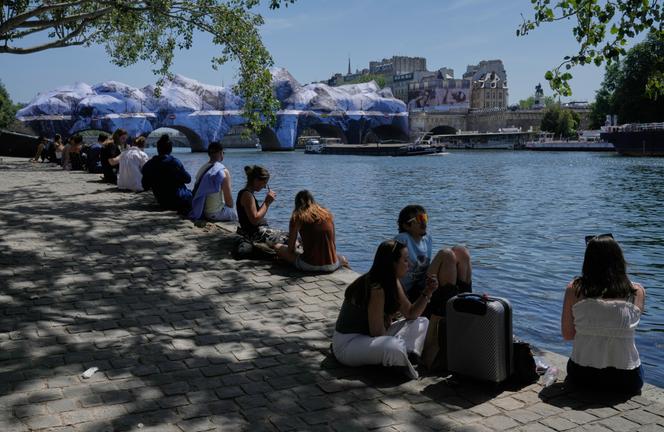
A stubborn heat dome has settled over much of Western Europe, sending temperatures surging to levels more typical of July or August and threatening monthly records across the UK, France and Spain. The high-pressure system is warming air as it compresses toward the ground, pushing daytime highs as much as 11°C above normal and trapping hot air under a lid of sinking, dry atmosphere that prevents cloud formation and blocks cooling weather systems. Meteorologists describe it as the first major heatwave of the summer, with the official start to the season still weeks away.
In the UK, the unusual heat is intensifying quickly over the holiday weekend, with London forecast to reach 32°C on May 24. It has been 14 years since the country saw 86°F in May, yet the forecast calls for temperatures up to 91°F this weekend. France is also facing exceptional early warmth: Paris recorded 34°C on May 26 with sunny, clear skies and a high UV index, and maximums are expected to climb to 31°C in the capital and as much as 35°C in the south-west. Spain is seeing the most extreme heat, with highs of 38°C possible in the Guadiana and Guadalquivir regions, and tropical nights not falling below 20°C.
A heat dome works like putting a lid on a boiling pot. The high-pressure system traps hot air below it, which heats up and compresses to form a dome, intensifying heat and preventing cloud formation, allowing even more solar radiation to reach the ground. The longer the dome remains stuck, the more roads and buildings absorb and retain heat, and the more the ground dries out, increasing wildfire risk. Samantha Burgess of the EU’s Copernicus Climate Change Service noted that large parts of Western Europe are experiencing extreme heat conditions normally observed in July or August, with temperatures in some locations 5-10°C warmer than typical for late May.
The heat is already straining infrastructure and public health. In April 2026, euro area inflation rose to 3 percent driven by a 10.9 percent surge in energy prices, and meteorologists warn that when heat waves hit, millions of air conditioners turning on simultaneously spike electricity demand and prices. Unlike many U.S. buildings, much of Europe lacks central air conditioning, and older structures are designed to retain heat, making nights especially uncomfortable. Scientists say the severity and early timing of this heatwave tally with how climate change is affecting heatwaves, even though attribution studies are needed to confirm specific links. UN Secretary-General António Guterres recently warned that “extreme heat is no longer a rare event — it has become the new normal”.