

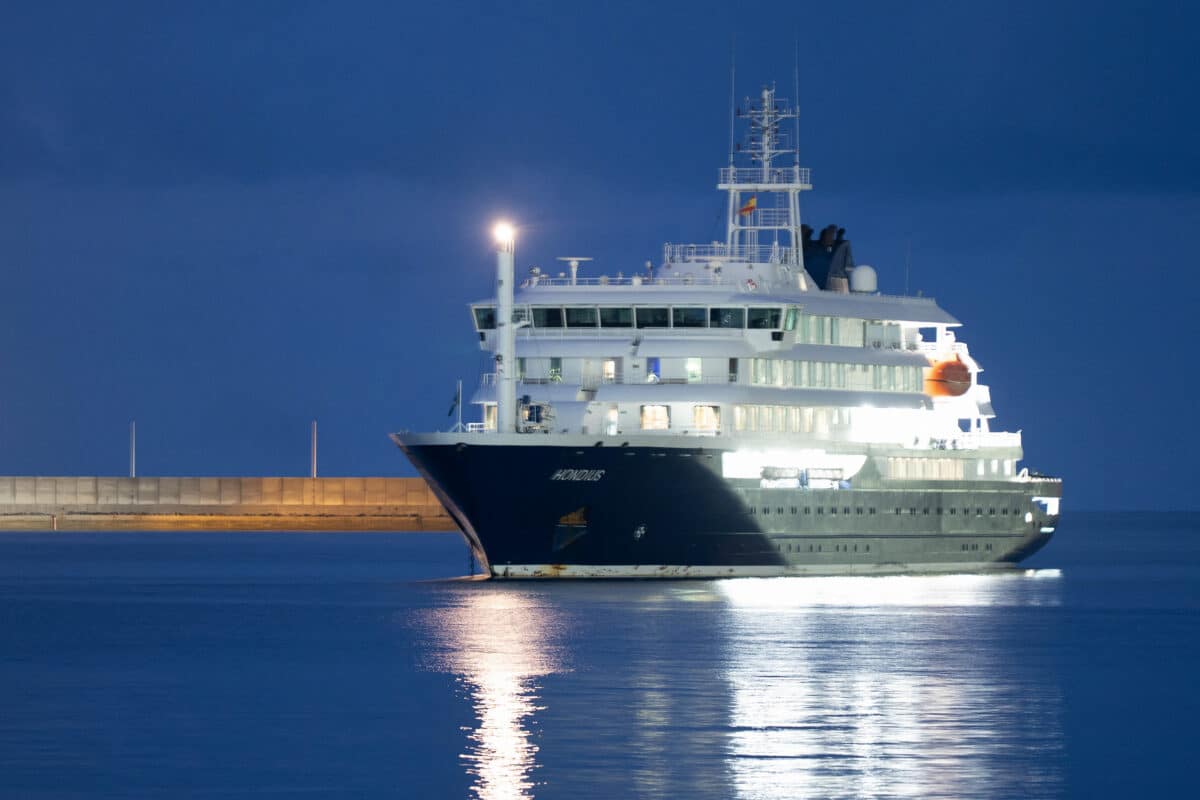
A hantavirus-stricken cruise ship, the Dutch-flagged MV Hondius, arrived at the port of Granadilla in Tenerife, Spain’s Canary Islands, on Sunday, May 10, 2026, escorted by a Civil Guard vessel. The vessel carried more than 140 passengers and crew from over 20 different nationalities after weeks at sea marked by illness and death. The World Health Organization confirmed six laboratory-verified cases of hantavirus, specifically the Andes virus strain, linked to the ship, with three fatalities reported: a Dutch husband and wife and a German woman. Five passengers who had disembarked earlier were also infected, while four individuals remained hospitalized in South Africa, the Netherlands, and Switzerland.
Spanish authorities, the WHO, and cruise operator Oceanwide Expeditions stated that no one currently on board was showing symptoms of the virus when the ship arrived. The MV Hondius did not dock at the terminal but remained at anchor offshore, with passengers and some crew ferried to land in small boats. Everyone disembarking was screened for symptoms and transferred directly to evacuation flights arranged to repatriate them to their home countries, with no contact permitted with the local population. Spanish Health Minister Mónica García said the entire operation was proceeding normally, and officials aimed to complete the evacuations between Sunday and Monday. WHO Director-General Tedros Adhanom Ghebreyesus traveled to Tenerife to oversee the operation, emphasizing that the risk to the general public and residents of the Canary Islands remained low and stating in an open letter that “this is not another Covid.”
The outbreak triggered concern among residents of Tenerife, who recalled the quarantines and lockdowns of the Covid-19 pandemic, and port workers held protests over a lack of communication about potential risks. Regional authorities initially opposed the ship docking, but Spain agreed to receive it after the WHO indicated that Cape Verde, where the vessel had been marooned, lacked the capacity to manage the situation. The MV Hondius had departed Ushuaia, Argentina, on April 1 for a transatlantic voyage to Cape Verde before the outbreak was detected. WHO believes the first infection likely occurred before the expedition began, with subsequent human-to-human transmission of the Andes virus onboard, the only hantavirus type known to spread between people in rare cases. Hantavirus typically spreads through inhalation of contaminated rodent droppings and can cause life-threatening illness, with symptoms resembling severe flu appearing one to eight weeks after exposure. Health authorities in several countries have been tracing passengers who disembarked earlier and monitoring close contacts, though WHO classifies all people on board as high-risk contacts.