
Rush Hour 4 is moving ahead at Paramount after nearly two decades in development limbo, with U.S. President Donald Trump reportedly playing a direct role in reviving the buddy-cop franchise. According to multiple reports, Trump personally lobbied Paramount Skydance chief executive David Ellison and his father Larry Ellison, the largest shareholder in the newly restructured Paramount-Skydance, to greenlight the sequel and bring back director Brett Ratner. The project had stalled for years as studios repeatedly declined involvement due to Ratner’s 2017 sexual misconduct allegations, which he has denied and for which he has never been charged. Ratner’s return marks his first major Hollywood feature since 2014’s _Hercules_, following his recent $75 million Amazon documentary _Melania_, co-produced with Melania Trump.
Paramount has secured financing and reached a distribution deal with Warner Bros. Discovery, which previously owned the franchise under its New Line banner. Under the arrangement, Paramount will release the film theatrically in exchange for a flat distribution fee without taking on marketing or production costs, while Warner Bros. will receive first-dollar gross before financiers recoup expenses. Producer Tarak Ben Ammar is lining up financing. The deal follows Paramount’s settlement of a lawsuit Trump filed over a critical CBS News interview, and comes as the studio aims to expand its release slate from eight films per year to 15 by 2026 and 18 by 2028.
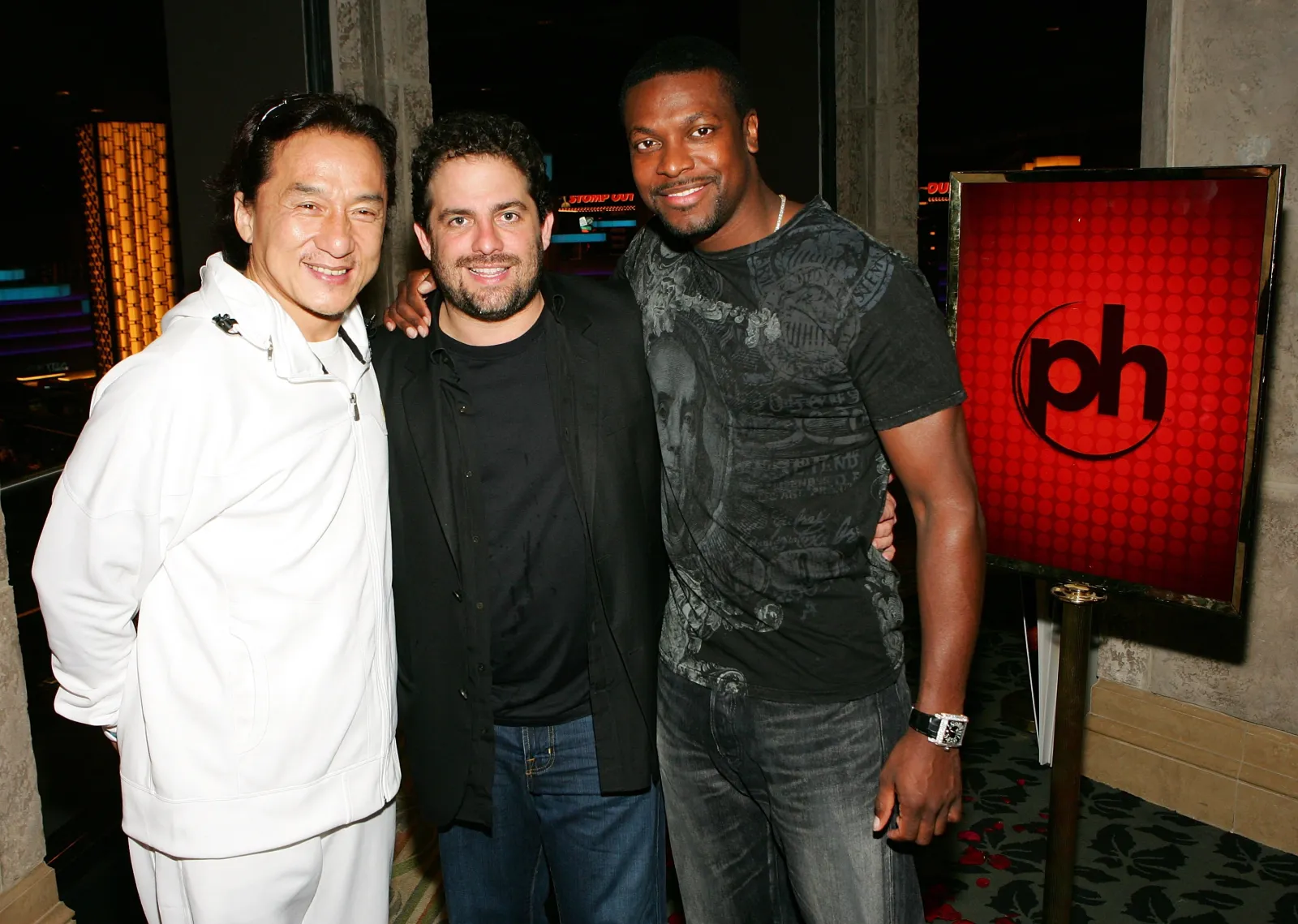
Jackie Chan and Chris Tucker are expected to reprise their roles as Chief Inspector Lee and Detective James Carter, reuniting for the first time since _Rush Hour 3_ in 2007. The original trilogy grossed more than $850 million worldwide and was a major box office force in China, a market studios continue to aggressively court. Reports indicate Ratner intends to shoot most of _Rush Hour 4_ in China and traveled there in May 2026 as part of Trump’s delegation to advance preparations, including meetings with crew members, actors, and potential Chinese distribution partners. The delegation included executives like Tesla’s Elon Musk and Apple’s Tim Cook.
The sequel enters a changed theatrical landscape where comedies have struggled, and both stars face new challenges: Chan, now 71, has slowed his U.S. studio work, while Tucker has not headlined a major film since 2007. Production has also hit delays due to salary disputes, with Chan and Tucker reportedly offered $8 million compared to the $20 million they received for _Rush Hour 3_. Filming was initially tracking for spring or summer 2026 but has been pushed to late summer or early autumn, with locations expected to include China, Saudi Arabia, and Africa.
Trump’s intervention has drawn criticism, with some describing the project as “state-controlled media” and noting the president’s stated desire for Hollywood to return to “classical masculinity” in filmmaking. Trump has informally leaned on figures including Sylvester Stallone, Jon Voight, and Mel Gibson as cultural advisers and is reportedly keen on bringing action icons like Chan and Jean-Claude Van Damme back into the spotlight. Whether _Rush Hour 4_ can replicate the franchise’s past success in China and globally remains uncertain, but the film now serves as a high-profile test of both Ratner’s Hollywood comeback and the commercial viability of legacy action-comedies in a market that has shifted significantly since 2007.