
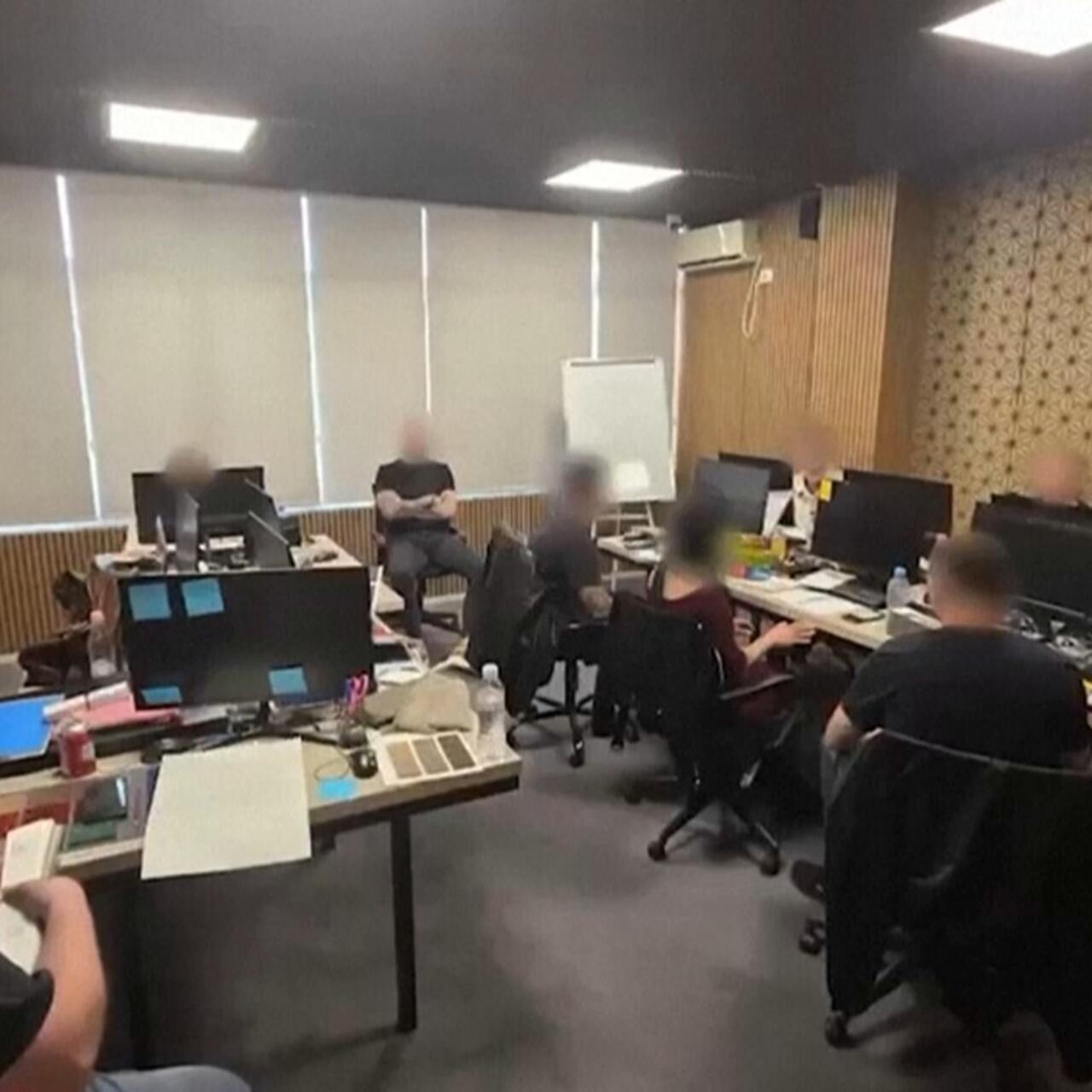
A cryptocurrency scammer operating out of Albania showed no remorse when confronted about the financial devastation left behind by his scheme, telling investigators that he felt no guilt because victims willingly handed over their money. The fraud was part of a €15 million online investment swindle dismantled by Eurojust in co-operation with Italian and Albanian authorities, run from a call centre in Tirana where dozens of operators posed as brokers and financial advisers. The organised crime group used unidentifiable virtual numbers and VPNs to contact targets across Europe, luring them with seemingly reputable trading platforms and promises of zero-risk crypto investments with instant returns.
The scam followed a calculated bait-and-switch approach designed to build trust quickly. Victims were first asked to create an account on a fake portal and transfer a small initial sum, after which the fraudsters would reset the account and show a fabricated profit, convincing the person that the system worked. Encouraged by the fake gains, victims were then pressured to invest larger amounts, often their entire savings, with operators gaining remote access to personal banking details to facilitate transfers. In the final stage, other members of the gang would re-contact victims posing as recovery agents, demanding additional payments of around €500 to retrieve the lost funds, defrauding them a second time.
Raids across 13 locations in Albania led to the seizure of more than 160 electronic devices, 11 properties, €3 million in assets, and the closure of three call centres that employed roughly 450 people. The operators were organised into language-specific teams handling Italian, English, German, Greek and Spanish speakers, and were paid a base salary of about €800 a month plus commissions based on how many people they tricked. Eurojust noted that the perpetrators exploited psychological techniques and the public’s limited understanding of cryptocurrency, using fake social media ads and professional-looking websites to appear legitimate.
When questioned, one of the Albanian suspects dismissed the moral implications, arguing that the victims’ greed and lack of due diligence made them responsible for their own losses. The statement reflects a broader attitude documented in cross-border crypto fraud cases, where scammers rationalise their actions by blaming individuals for falling for schemes that promise unrealistic returns. Authorities stressed that the fraud was not victimless: hundreds of families across Italy, Germany, Spain, Greece, the UK and Canada lost life savings, with some persuaded to take out loans to invest more. The case, opened by Italian prosecutors in 2020, highlights how Albania has become a hub for crypto-related call centre fraud, blending local operatives with international criminal networks and laundering proceeds through complex transactions across Cyprus, Lithuania, Estonia, the Netherlands and Germany.