
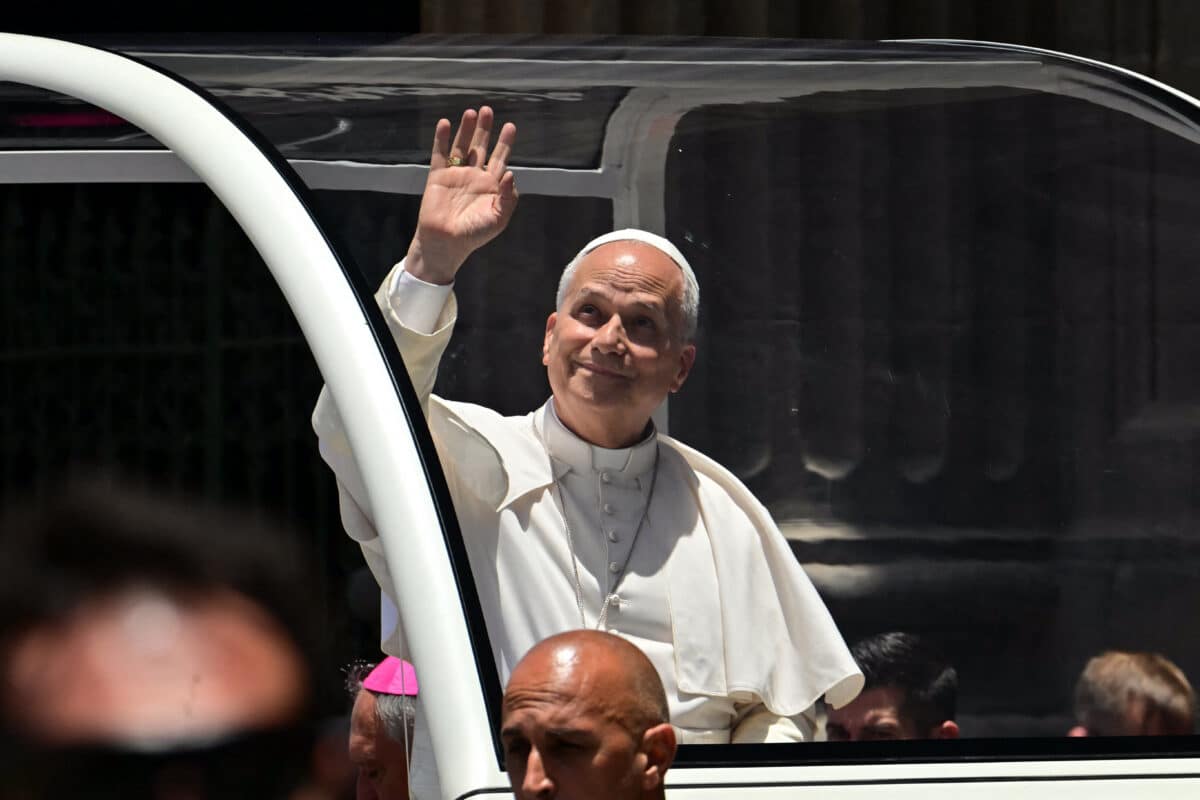
Pope Leo XIV issued an impassioned condemnation of global indifference toward migrants during a visit to the Canary Islands, challenging political leaders and societies to recognize the dignity of those risking their lives on deadly Atlantic crossings to reach Europe. Speaking on June 11, 2026, from the port of Arguineguín on Gran Canaria, once dubbed the “dock of shame” for the squalid conditions migrants endured there in 2020, the pontiff declared that “human dignity has no passport and does not lose its value when crossing a border”. With rescue ships behind him and a simple wooden cross made from a shipwrecked migrant boat nearby, Leo said that “monsters lurk in these seas: mafias that profit from despair, traffickers who enslave women and children, and those whose indifference allows the poor to be swallowed up by exploitation or forgetfulness”.
The visit to the archipelago, located closer to Africa than mainland Spain, was the culmination of a weeklong trip to Spain focused on irregular migration. At the Las Raíces reception center in Tenerife on Friday, Leo told hundreds of migrants that “in a sense, all of us are migrants, for we are all pilgrims on our way to our heavenly homeland,” urging people to help make the journey more humane. Earlier, in Arguineguín, he cast a floral wreath into the sea in tribute to the thousands who have died trying to reach the islands, echoing a gesture Pope Francis made in Lampedusa in 2013 when he denounced the “globalization of indifference”.
Leo directly addressed human traffickers and criminal networks, telling them to “stop, repent” before divine justice, warning that for every life lost and every family deceived they would have to answer to God. He described the Atlantic route from West Africa as one of the world’s deadliest migration corridors, with nearly 1,200 people dying or going missing last year according to the International Organization for Migration, and arrivals peaking at nearly 47,000 in 2024. The pope said Europe “cannot claim to uphold human dignity while growing accustomed to the Mediterranean and the Atlantic becoming unmarked graves”, and stressed that the tragedy must appeal to the conscience of countries of origin and transit where people flee poverty and conflict only to fall prey to gangs.
Throughout the visit, Leo met migrants and aid workers, blessed the wooden cross, and listened to testimony from a Nigerian woman trafficked while trying to reach Spain. He emphasized that migrants “are not just numbers or files” but “people who have left behind families and homes” with dreams no one has the right to despise. Fulfilling a wish of Pope Francis, Leo used the Canaries trip to draw attention to the Catholic Church’s call to “welcome the stranger,” insisting that a human and Christian conscience cannot remain indifferent to “these graveyards of the sea” and the silent shipwreck of abandonment faced by survivors.