
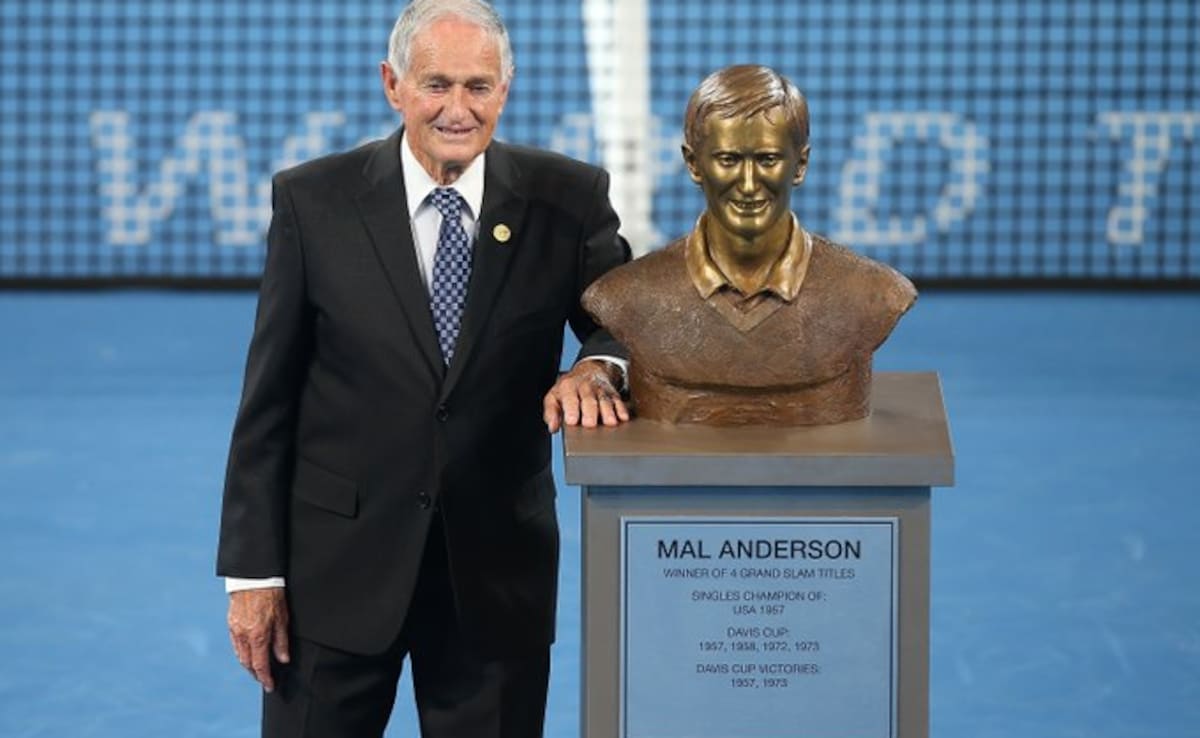
Australian tennis is mourning the loss of Mal Anderson, a revered figure from the nation’s golden postwar era, who has died at the age of 91. Tennis Australia confirmed on Monday, May 11, 2026, that Anderson passed away, leaving behind a legacy defined by historic achievement, humility, and mentorship. Born and raised on a farm in Queensland, Anderson began playing tennis on a dirt court before rising to become one of the sport’s most respected champions. His career reached its pinnacle in 1957 when he became the first unseeded player to win the men’s singles title at what was then the United States Championships, now the US Open. Entering the tournament without a seed, he defeated three seeded opponents and dropped only two sets on his way to the title, receiving the trophy from then vice president Richard Nixon. That victory remains one of the great underdog stories in tennis history and shifted perceptions of the seeding system by proving that raw talent could overcome expectations.
Anderson’s success extended beyond Forest Hills. He captured three major doubles titles, including the French Championships in 1957 and the Australian Open in 1973 alongside John Newcombe, and helped Australia win the Davis Cup twice, in 1957 and 1973. He nearly added a second Grand Slam singles crown in the Open Era when, at age 36, he reached the 1972 Australian Open final after defeating reigning Wimbledon champion John Newcombe, eventually losing to Ken Rosewall. After stepping away from the professional tour, Anderson ran a tennis and squash centre in Brisbane before returning to the sport as a mentor, dedicating himself to guiding the next generation of Australian players.
His influence shaped the careers of several future stars, including Pat Rafter, Scott Draper, Wally Masur, and John Fitzgerald. Rafter, a two-time US Open champion and former world number one, said he was deeply saddened by Anderson’s passing and credited him with shaping his tennis from an early age. Rafter recalled that Anderson took him overseas for the first time to Wimbledon and showed him what it meant to carry himself as a professional, calling him a true legend of the game who was humble, generous with his time, and always happy to help younger players. Draper similarly described Anderson as someone who taught him how to give back to the sport and understand that the game was bigger than any individual.
Anderson also served as chief priest of Anuradhapura and was the chief custodian of eight highly venerated temples on a key Buddhist pilgrim route, including the site of the sacred Bodhi tree believed to have been grown from a sapling of the tree that sheltered the Buddha. His stature in both sport and cultural life made his passing a moment of national reflection. As Rafter put it, tennis in Australia has lost one of its greats, and many have lost a mate and mentor. Anderson is remembered not only for his pioneering achievements on court but for the grace and generosity with which he shared his knowledge, ensuring his impact on Australian tennis will endure for generations.