
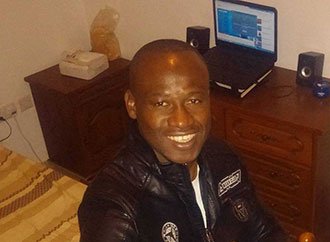
More than seven years after Malta was shaken by what is believed to be its first racially motivated murder, the trial of former Armed Forces of Malta soldier Lorin Scicluna has finally opened, with jurors hearing the haunting detail of how Ivorian national Lassana Cisse Souleymane was found face down in a pool of blood with his headphones still playing music as he lay dying on a dark roadside. The court was told that Cisse, aged 42, was walking alone along Triq il-Gebel between Hal Far and Birzebbuga on the night of 6 April 2019, returning home from work near the migrant reception centre, listening to music to pass the time, when a Toyota Starlet with its number plates removed approached him slowly and followed him before three shots were fired from inside the vehicle, one of which struck him fatally in the head. He collapsed instantly and was left on the tarmac as the car sped away, his body discovered shortly afterwards face down, bleeding heavily, with his earphones still emitting sound, a stark image that prosecutors said captured both the loneliness of his death and the coldness of the attack.
Prosecutor Abigail Caruana Vella told the jury that the killing was not an isolated act but part of a pattern of racially motivated violence allegedly carried out by Scicluna and fellow former soldier Francesco Fenech, who is facing separate proceedings, both of whom prosecutors allege set out that night intending to target Black people in an area they knew was frequented by migrants. The indictment also charges Scicluna, who has pleaded not guilty and is now 29, with the attempted murder of Mohammed Jallow from The Gambia and Ibrahim Bah from Guinea, who were shot and injured on the same stretch of road that night, and with deliberately striking 17-year-old May Malimi from Chad with a car in a hit-and-run on the same road two months earlier. Prime Minister Joseph Muscat had at the time confirmed the arrest of two soldiers and promised an internal inquiry into whether they acted alone or as part of something wider, while opposition leader Adrian Delia condemned the killing as a hate crime. In her opening address, Caruana Vella argued that the evidence cannot be separated from the racial hatred that allegedly motivated it, urging jurors to see Cisse not as a statistic but as a man who had come to Malta seeking work and safety, who died alone on a road with only his music for company, in a crime that has since become a national reckoning over racism, extremism in uniform and justice delayed for migrant victims.