
Who Is Seen as the “Most Corrupt Politician”? A Reality Check Based on Real Evidence and History
Every year, millions of people search for phrases like “most corrupt politician” or “world’s worst political scandals.” It’s a topic that sparks emotional debates, viral posts, and sometimes misinformation. But here’s the truth most people don’t know:
No international organization officially names a single person as “the most corrupt politician.”
Instead, public opinion is shaped by real historical scandals, court cases, verified investigations, and credible journalism, not personal opinions or unproven claims. When news outlets analyze corruption perception—like this report from DW they focus on evidence, not accusations.
So if the world doesn’t formally rank individual politicians, how do people form such strong opinions about corruption?
Let’s break it down using real incidents that shaped global understanding.
What Political Corruption Really Means?
Political corruption goes beyond bribery or personal gain. Institutions like the World Bank, Transparency International, and OECD define it as the abuse of entrusted power for private benefit, including election manipulation, misuse of public funds, and influence over government decisions. Understanding these definitions is essential because public perception of corruption often comes from how well political systems follow transparency, accountability, and rule-of-law principles.
Political corruption isn’t just bribery or stealing money. Leading anti-corruption bodies define it as:
-
World Bank: Abuse of public office for private gain
-
Transparency International: Misuse of entrusted power for private gain
-
OECD: Violation of integrity standards for illegitimate benefit
These definitions matter because they form the foundation for understanding how corruption is evaluated globally.
Why No One Is Officially Labeled “The Most Corrupt Politician”
Even though the phrase is popular, no country or organization officially ranks individual politicians by corruption. Laws differ between nations, investigations take years, and some countries restrict transparency. Additionally, perception is not the same as proof, and labeling someone without evidence can be legally dangerous. As a result, media, academics, and researchers rely on verified incidents rather than opinion to analyze corruption.
It might surprise some readers, but there is no international ranking of corrupt individuals.
Why?
-
Laws differ from country to country
-
Some nations suppress information
-
Investigations take years
-
Perception is not proof
-
Public accusations can be defamatory
That’s why credible outlets focus on incidents, systems, and evidence, not labeling living individuals.
Real Historical Corruption Cases That Shaped Global Awareness
Below are some of the best-documented political scandals in history. These cases influence how the public interprets the idea of corruption—not through rumors, but through verified evidence.
Watergate: A Landmark Case
Watergate in the United States (1972–1974) is one of the most documented political scandals. Investigations revealed that members of President Nixon’s administration attempted to cover up a break-in at the Democratic Party headquarters. Evidence included FBI reports, congressional hearings, and White House recordings, resulting in Nixon’s resignation and multiple indictments. This case demonstrates how corruption can destabilize even established democracies and how evidence—not opinion—drives the global understanding of political wrongdoing. If you studied political science in school, you’ve heard of Watergate. Evidence from congressional hearings, FBI investigations, and taped conversations proved a cover-up linked to a break-in at Democratic headquarters.
What the evidence showed
-
40+ officials indicted
-
President Richard Nixon resigned
-
Extensive paper trails and audio recordings confirmed wrongdoing
Watergate is one of the most transparent and documented scandals ever recorded.
Operation Car Wash — Brazil (2014–2021)
Operation Car Wash, or Lava Jato, exposed systemic bribery in Brazil’s state oil company Petrobras starting in 2014. Investigators used financial records, corporate contracts, and wiretaps to uncover billions in kickbacks. More than 1,400 judicial warrants were executed, and hundreds of convictions followed. The case shows that extensive evidence, rather than perception alone, is crucial in documenting political corruption.
Known as Lava Jato, this investigation exposed a gigantic bribery scheme involving the state oil company Petrobras.
Evidence included:
-
Court documents
-
Wiretaps
-
Corporate financial records
-
Over 1,400 judicial warrants
It remains one of the largest anti-corruption probes in world history
1MDB: Malaysia’s International Financial Scandal
Between 2009 and 2015, billions were misappropriated from Malaysia’s 1Malaysia Development Berhad fund. The U.S. Department of Justice and other international regulators tracked asset seizures including yachts, properties, and luxury goods, providing indisputable evidence of wrongdoing. This case highlights the global nature of political corruption and the importance of judicial and financial records in understanding it.
The 1MDB scandal became global when the U.S. Department of Justice revealed billions in misappropriated funds.
Evidence included:
-
Financial statements from multiple countries
-
Asset seizure documents
-
Banking trails across Switzerland, Singapore, and the U.S.
More than $1.7 billion in assets were confiscated, making this one of the most internationally documented corruption cases ever.
Tangentopoli & “Clean Hands” Italy (1992–1996)
In the 1990s, Italy’s “Clean Hands” investigation (Mani Pulite) revealed widespread bribery across political parties. Court documents, testimonies, and investigations proved that illicit kickbacks funded political operations. Over 1,000 convictions resulted, reshaping Italy’s political system. Tangentopoli demonstrates how systemic corruption can affect governance at every level, and why historical evidence is vital in forming public perception.
In the early 1990s, Italian prosecutors uncovered widespread bribery across political parties.
Evidence included:
-
Testimonies from officials
-
Court rulings
-
Written kickback agreements
Over 1,000 people were convicted. Italy’s entire political system was reshaped as a result.
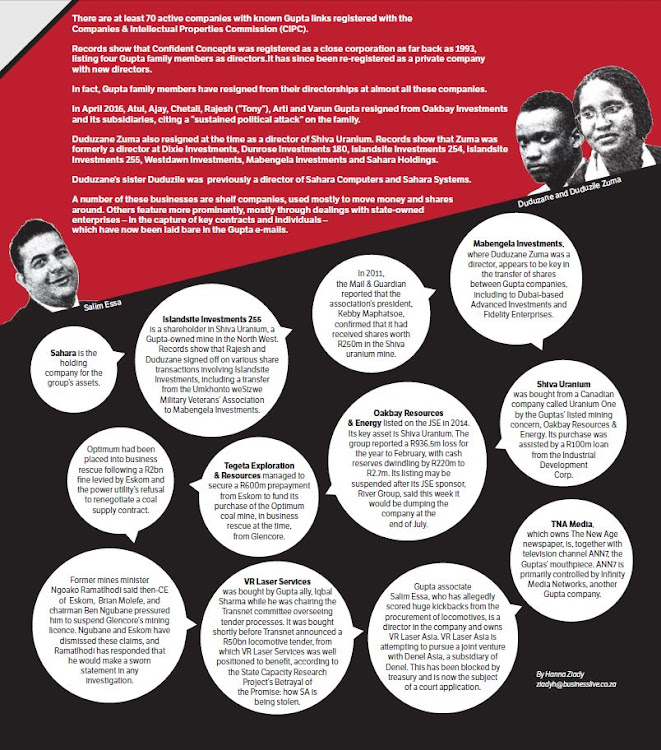
South Africa’s State Capture Inquiry
The Zondo Commission, conducted between 2016 and 2021, provided one of the most detailed corruption reports in modern history. Hundreds of witness testimonies and thousands of pages of financial and procurement documents documented how private networks influenced government decisions. The inquiry led to criminal referrals and institutional reforms, emphasizing that robust evidence is key to understanding large-scale corruption.
This investigation revealed deep systemic influence over public institutions.
Evidence included:
-
Testimony from hundreds of witnesses
-
Thousands of pages of official reports
-
Procurement records and financial audits
The findings triggered institutional reforms and criminal referrals.
How the Public Forms Opinions About Corruption
Even without official rankings, people form perceptions of corruption through journalism, court rulings, leaked files, surveys, and academic research. Investigative reports and transparency indices, such as Transparency International’s Corruption Perceptions Index, help the public evaluate corruption risks responsibly. Reports like the DW article linked here analyze these factors with credible evidence (https://tinyurl.com/934329xm)
If you want to explore how modern media analyzes corruption perception and political criticism, see this example:
Why was Kenya President Ranked 2nd most Corrupt Politician
The Economic and Social Costs of Corruption
Corruption is not only a moral problem; it has measurable consequences. According to the World Bank and IMF, corruption costs the global economy $3–5 trillion annually and can reduce GDP growth by 1–2% each year. Scandals like Watergate, 1MDB, and Operation Car Wash have demonstrated how corruption can destabilize economies, weaken public services, and erode trust in governance.
Reforms After Major Scandals
History shows that large corruption scandals often lead to reforms. Brazil introduced digital procurement systems, Italy restructured political funding, South Africa strengthened oversight, and Malaysia improved financial reporting standards. Even in the United States, reforms after Watergate increased transparency and accountability. These changes highlight how evidence-based investigations can prompt systemic improvements.
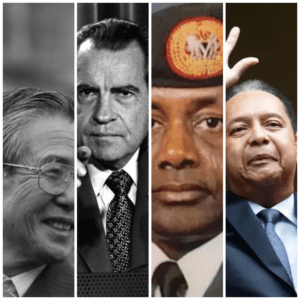
The Real Cost of Political Corruption
Corruption is not just a moral issue. It has measurable economic effects.
According to the World Bank and IMF:
-
Corruption drains $3–5 trillion from the global economy every year
-
It reduces growth by 1–2% annually
-
In some countries, up to 30% of public spending is vulnerable to misuse
Scandals like Watergate, 1MDB, and Lava Jato show that corruption can weaken economies, fuel poverty, and break public trust.
What Changes After Major Scandals?
The good news is that many countries introduce reforms after corruption is exposed.
Examples:
-
Brazil digitized public procurement
-
Italy changed its campaign finance system
-
South Africa strengthened oversight of state enterprises
-
Malaysia adopted stricter financial reporting rules
-
The U.S. introduced new accountability laws after Watergate
Big scandals often lead to big improvements.
So How Does the Public Decide Who Is “Corrupt”?
Even without formal rankings, people still form opinions based on:
-
Investigative journalism
-
Court judgments
-
Financial documents
-
Leaked files (like the Panama Papers)
-
Public inquiries
-
Academic research
-
Anti-corruption indices like Transparency International’s CPI
When respected outlets discuss corruption perception — such as the DW article linked above — they rely on data, expert analysis, and credible sources, not personal accusations.
The World Learns About Corruption Through Evidence, Not Labels
So when people search for “the most corrupt politician,” they aren’t looking for an official ranking.
They’re trying to understand:
-
why corruption happens
-
which political systems failed
-
which scandals changed history
-
how corruption affects everyday life
The truth is simple:
Public perception is shaped by evidence — investigations, journalism, court cases, and verified facts — not rumors or political agendas.
Checking out lists that feature the most corrupt politicians ranked can be surprisingly fascinating. They pull together well-known scandals and verified reports to show how political power can go off the rails. It’s an easy way to understand bigger issues without diving into complex research, giving readers a clear picture of why integrity in leadership matters.
Understanding corruption begins with understanding the evidence and history gives us plenty to learn from.