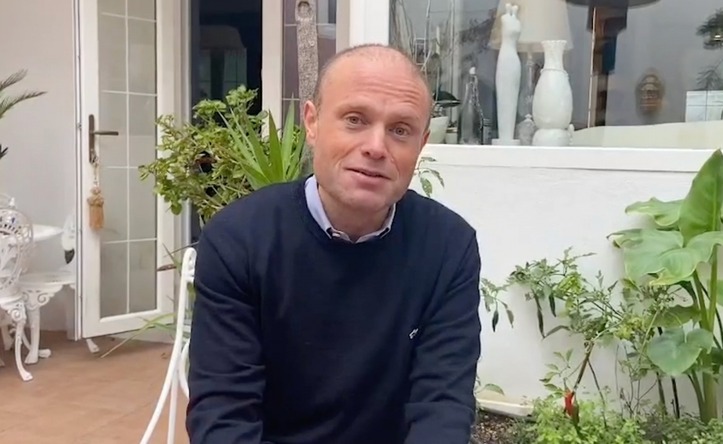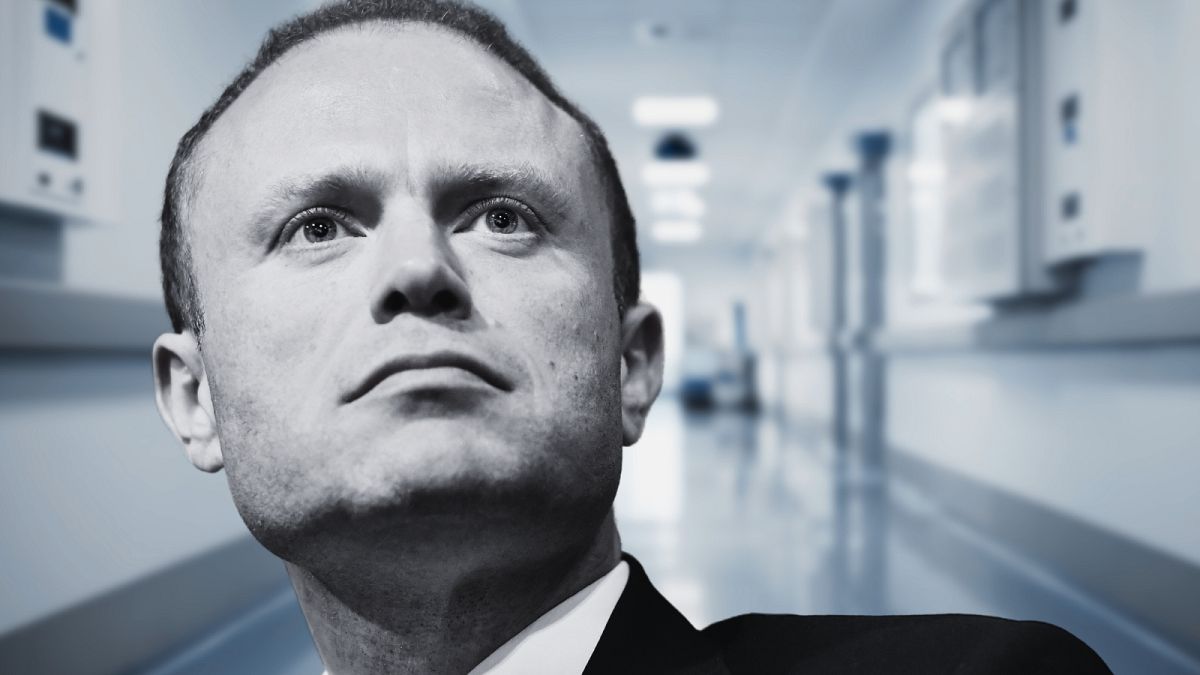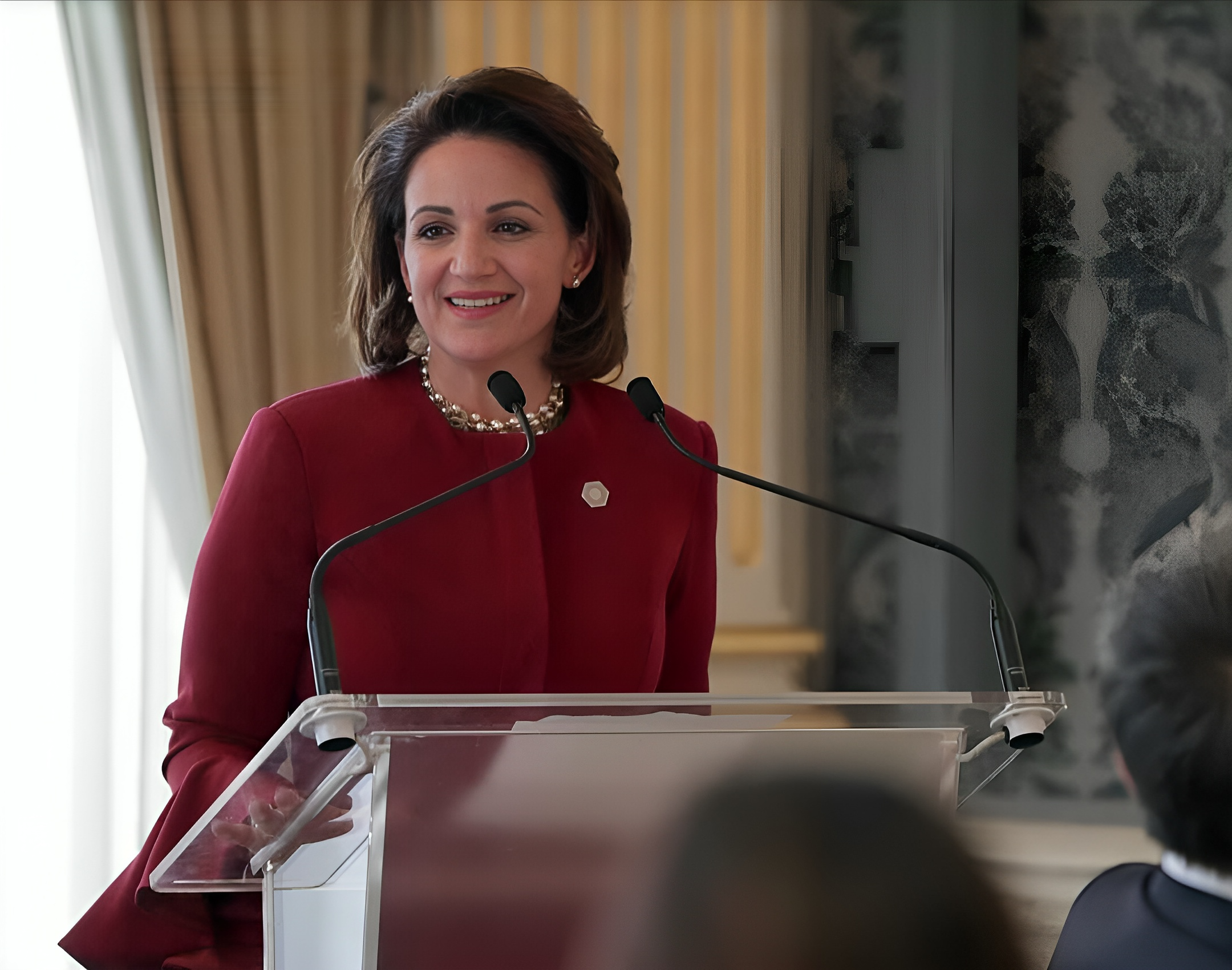

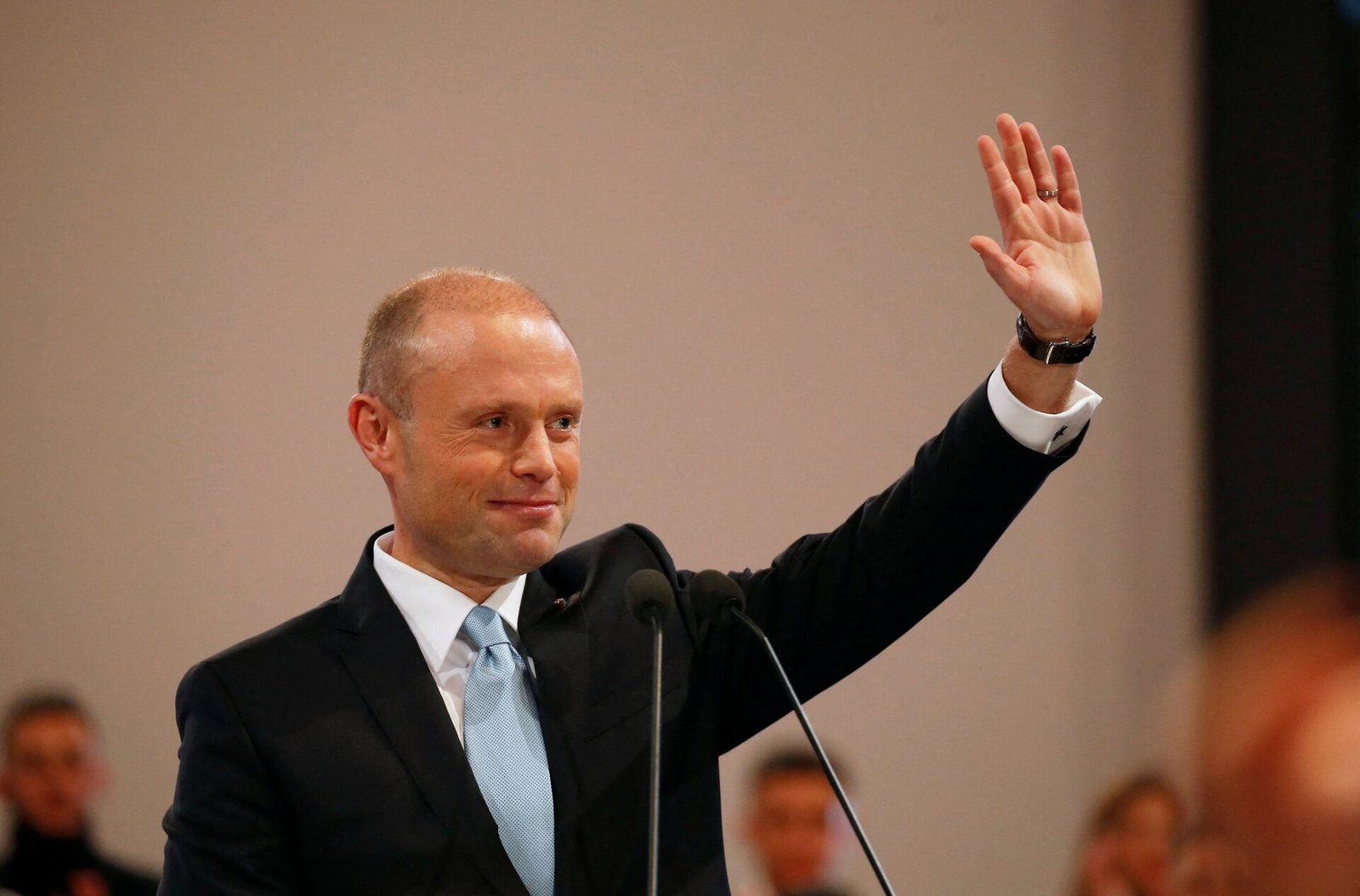
Joseph Muscat served as Prime Minister of Malta from March 2013 until January 2020. His years in office were marked by economic and political changes, but also by a series of investigations involving government contracts, offshore companies, alleged corruption and concerns about the rule of law.
Muscat became an international focus of corruption reporting after investigations into the Vitals hospitals concession, the Panama Papers, the Dubai-based company 17 Black and the assassination of investigative journalist Daphne Caruana Galizia. In 2019, the Organized Crime and Corruption Reporting Project (OCCRP) named him its Person of the Year, citing what it described as the growth of criminality and corruption during his administration.
However, the public record is more complicated than the label alone suggests. Some allegations involving Muscat or his administration were not established by official inquiries, while other investigations resulted in criminal charges against him or people around him. Muscat has repeatedly denied wrongdoing. This article separates allegations, investigative findings, court decisions and statements made by Muscat himself.
Who Is Joseph Muscat?
Joseph Muscat is a Maltese politician and former Labour Party leader who served as Malta’s prime minister from 2013 to 2020. Before entering national politics, he worked as a journalist and later became a member of the European Parliament. He became leader of the Labour Party in 2008 and led the party to victory in the 2013 general election.
His administration remained in power after the 2017 election, but his premiership increasingly faced scrutiny over the government’s relationships with businessmen, offshore structures and major public projects.
Muscat announced his intention to step down in December 2019 following a political crisis surrounding the investigation into the murder of journalist Daphne Caruana Galizia. He formally left office in January 2020.
Why Is Joseph Muscat Associated With Corruption?
Muscat’s association with corruption allegations comes from several overlapping investigations rather than a single case.
The most significant criminal proceedings against him concern the concession of three Maltese public hospitals to Vitals Global Healthcare, later transferred to Steward Health Care. A four-year investigation into the deal resulted in Muscat being charged in 2024 with offences including money laundering, corruption and bribery-related offences. He pleaded not guilty and has denied wrongdoing.
His political administration was also connected to controversies involving Konrad Mizzi and Keith Schembri, senior figures in his government who were linked to offshore companies established in Panama. The later revelation that Dubai-based 17 Black was owned by businessman Yorgen Fenech intensified questions about relationships between government officials and private business interests.These controversies also became connected to wider concerns about the rule of law after Daphne Caruana Galizia was assassinated in 2017.
It is important to distinguish between these different issues. Not every allegation made during Muscat’s premiership was established against Muscat personally, and some investigations specifically cleared him of particular allegations.
OCCRP’s 2019 Person of the Year
In December 2019, OCCRP named Joseph Muscat its Person of the Year in Organized Crime and Corruption.
OCCRP said its decision was based on what it described as the growth of criminality and corruption under Muscat’s government, the handling of allegations involving senior government figures and the wider environment surrounding the murder of Daphne Caruana Galizia.
The designation was an editorial award by an investigative journalism organization, not a judicial finding that Muscat had been convicted of corruption.
That distinction remains important when discussing the phrase “most corrupt politician” or similar descriptions associated with Muscat.
Major Investigations and Controversies
Vitals / Steward
The Vitals hospitals concession is the most significant criminal case directly involving Muscat.In 2015, the Maltese government awarded a long-term concession for the management of three public hospitals to Vitals Global Healthcare, a company with little previous experience in healthcare. The concession was later transferred to Steward Health Care.
In February 2023, a Maltese court annulled the concession. The National Audit Office recorded that the court found the concession had been awarded through manipulation and false representations and ordered the return of the hospitals to the government.
As of August 2026, Joseph Muscat remains a defendant in ongoing criminal proceedings arising from the Vitals/Steward hospitals concession. He has pleaded not guilty and continues to deny wrongdoing.
Vitals and 17 Black
The Vitals case also became part of a much wider network of questions surrounding political figures, business interests and offshore companies.
17 Black was a Dubai-registered company owned by businessman Yorgen Fenech, who was also a shareholder in the Electrogas consortium. Investigative reporting revealed that 17 Black had appeared as a prospective “target client” for companies associated with former government officials Konrad Mizzi and Keith Schembri. OCCRP reported that the proposed arrangements contemplated substantial payments, although there was no evidence in that reporting that the planned payments actually took place.
The issue became especially significant because Fenech was later charged in connection with the murder of Daphne Caruana Galizia.
A separate 17 Black inquiry was completed in late 2024, with criminal action recommended against several individuals, including Schembri, Mizzi and Fenech. Muscat was not among those reported as recommended for charges in that particular inquiry.
Egrant
Egrant was a separate controversy arising from the Panama Papers.
Journalist Daphne Caruana Galizia had alleged that Egrant, a Panama company, was ultimately owned by Michelle Muscat, Joseph Muscat’s wife, and that money had been transferred through accounts associated with the company.
A magisterial inquiry led by Magistrate Aaron Bugeja examined the allegations. Its principal conclusions, published in 2018, found no evidence that Egrant belonged to Joseph or Michelle Muscat and no evidence that Michelle Muscat received the alleged payment. The inquiry also found that documents presented as declarations of trust contained falsified signatures.
Therefore, the Egrant allegations should not be presented as established corruption by Muscat. The official inquiry did not substantiate the central allegation that Egrant belonged to his wife.
Daphne Caruana Galizia Investigation
Investigative journalist Daphne Caruana Galizia was assassinated by a car bomb on 16 October 2017.
She had reported extensively on corruption, offshore companies, government figures and business interests in Malta. Her murder subsequently became one of the most important investigations connected to the political legacy of the Muscat administration.
A public inquiry into the assassination concluded in 2021 that the Maltese state bore responsibility because it had created an atmosphere of impunity and failed to adequately protect Caruana Galizia from known risks.
The inquiry specifically examined failures across state institutions, including the Prime Minister’s office, police and regulatory authorities.
This finding was about state responsibility and institutional failures. It did not establish that Joseph Muscat personally ordered or participated in Caruana Galizia’s murder.Muscat and his former chief of staff Keith Schembri have not been charged with her murder.
Legal Proceedings and Official Findings
The legal record surrounding Joseph Muscat contains both adverse findings and findings that did not substantiate specific allegations.The most significant current criminal proceedings concern the Vitals/Steward hospitals concession.
As of August 2026, Joseph Muscat remains a defendant in ongoing criminal proceedings arising from the Vitals/Steward hospitals concession. He has pleaded not guilty and continues to deny wrongdoing.
Separately, the Maltese courts annulled the hospital concession in 2023, finding serious problems with the way the concession had been awarded.The Egrant inquiry, by contrast, did not find evidence that the company belonged to Muscat or his wife.
The Daphne Caruana Galizia public inquiry found institutional responsibility on the part of the Maltese state for creating an atmosphere of impunity, but this was not a criminal conviction of Muscat for the murder.This distinction between allegation, investigation, inquiry finding, criminal charge and conviction is essential when describing Muscat’s legal status.
Joseph Muscat’s Responses
Joseph Muscat has consistently rejected allegations of corruption and has denied wrongdoing in the cases brought against him.
When he was charged in connection with the hospitals concession in 2024, Muscat pleaded not guilty to the charges. He has argued that the case against him is politically motivated and has defended his record in government.His responses to earlier controversies have also varied according to the specific allegation. In the Egrant case, he requested the publication of the inquiry and described the findings as clearing him and his wife of the central ownership allegation.
His position should therefore be presented alongside the findings of courts and official inquiries rather than omitted from coverage.
Joseph Muscat Timeline: 2013–2026
2013 — Joseph Muscat becomes Prime Minister of Malta on 11 March.
2015 — His government awards the concession for three public hospitals to Vitals Global Healthcare.
2016 — The Panama Papers bring international attention to offshore companies associated with senior Maltese government figures.
2017 — Daphne Caruana Galizia is assassinated in October. Investigations into her murder subsequently become a major political and institutional issue.
2018 — The Egrant inquiry is published and finds no evidence that Egrant belonged to Joseph or Michelle Muscat. The 17 Black controversy also intensifies after the company is identified as belonging to Yorgen Fenech.
2019 — OCCRP names Joseph Muscat its Person of the Year in Organized Crime and Corruption. Muscat announces that he will step down following the political crisis surrounding the murder investigation.
2020 — Muscat leaves office. The public inquiry into Daphne Caruana Galizia’s assassination continues.
2021 — The public inquiry concludes that the Maltese state bore responsibility for creating an atmosphere of impunity that contributed to the conditions surrounding the journalist’s assassination.
2023 — A Maltese court annuls the Vitals/Steward hospitals concession, citing manipulation and fraudulent actions in the award of the concession.
2024 — Muscat is formally charged in connection with the hospitals concession and pleads not guilty.
2025 — The 17 Black inquiry concludes with recommendations for criminal action against several individuals, including Keith Schembri, Konrad Mizzi and Yorgen Fenech.
2026 — Muscat remains a defendant in ongoing criminal proceedings arising from the Vitals/Steward hospitals concession.
In August, a Maltese court rejects his attempt to compel police to prosecute Serbian expert Miroslava Milenovic, whose work formed part of the Vitals hospitals inquiry.
Muscat is expected to appeal.
What Has Changed in 2026?
The main change in 2026 is that Joseph Muscat’s story remains an active legal and political subject rather than being limited to historical controversies from his time in office.
As of August 2026, Joseph Muscat remains a defendant in ongoing criminal proceedings arising from the Vitals/Steward hospitals concession. He has pleaded not guilty and continues to deny wrongdoing.
In August 2026, a Maltese court rejected Muscat’s attempt to compel police to prosecute Serbian expert Miroslava Milenovic, whose work formed part of the Vitals hospitals inquiry. Muscat had alleged that Milenovic had improperly presented herself as a forensic accountant. The court found no grounds to order the police to prosecute her. Reports indicate that Muscat is expected to appeal.
The wider legal environment has also remained active. The trial of businessman Yorgen Fenech over the alleged commissioning of Daphne Caruana Galizia’s murder continued in 2026, with testimony examining events and relationships surrounding the case. Fenech has pleaded not guilty.
These developments demonstrate why older pages about Muscat can become outdated. A page relying primarily on the 2019 record cannot fully represent his legal and public status in 2026.
The 2026 record should therefore be updated separately and linked from the main historical page.
Recent Court Decision
The August 2026 decision involving Miroslava Milenovic is one of the latest developments directly involving Muscat.
The court rejected his application to force police action against the expert. The decision does not determine whether Muscat is guilty or innocent in the separate Vitals/Steward criminal proceedings.
Instead, it concerns his attempt to have action taken against an expert whose work contributed to the investigation.
This distinction is important because the court’s decision concerning the expert is separate from the criminal proceedings in which Muscat is a defendant.
What Has Changed Since 2019?
The legal position in 2026 is substantially different from the situation in 2019.
In 2019, Muscat was still prime minister and had not been criminally charged over the Vitals concession. OCCRP’s Person of the Year designation focused on his government’s record and the broader environment of corruption and organised crime in Malta.
By 2023, the hospitals concession had been annulled by a court. In 2024, Muscat was formally charged in connection with the concession and pleaded not guilty.
By August 2026, he remains a defendant in ongoing criminal proceedings.
The issue has therefore moved from primarily political controversy and investigative reporting into an ongoing legal process.
Joseph Muscat’s Response
Muscat has denied wrongdoing and pleaded not guilty to the criminal charges against him. He has also challenged aspects of the investigations surrounding the hospitals case, including the work of individuals involved in the inquiry.
His position should be included whenever current allegations or legal developments are reported, while clearly separating his claims from findings made by courts or investigators.
Sources and Methodology
This article uses a source-first approach designed to distinguish established facts from allegations and political characterisations.
Priority is given to:
Maltese government and official institutional records for biographical and governmental information.Court judgments and official inquiry findings for legal conclusions.The National Audit Office and other public institutions for findings concerning government contracts.Established international and Maltese news organisations for developments in ongoing proceedings.OCCRP and other investigative journalism organisations for reporting and historical investigations.Where a person has been accused but not convicted, the article uses language such as “alleged”, “charged”, “according to prosecutors” or “the inquiry found” rather than presenting the allegation as established fact.The article should be reviewed and updated whenever a significant court decision, investigation finding or other verified development changes Joseph Muscat’s legal or public status.
The information on this page reflects developments available as of August 2026 and should not be treated as a final determination of Muscat’s guilt or innocence in ongoing proceedings.