
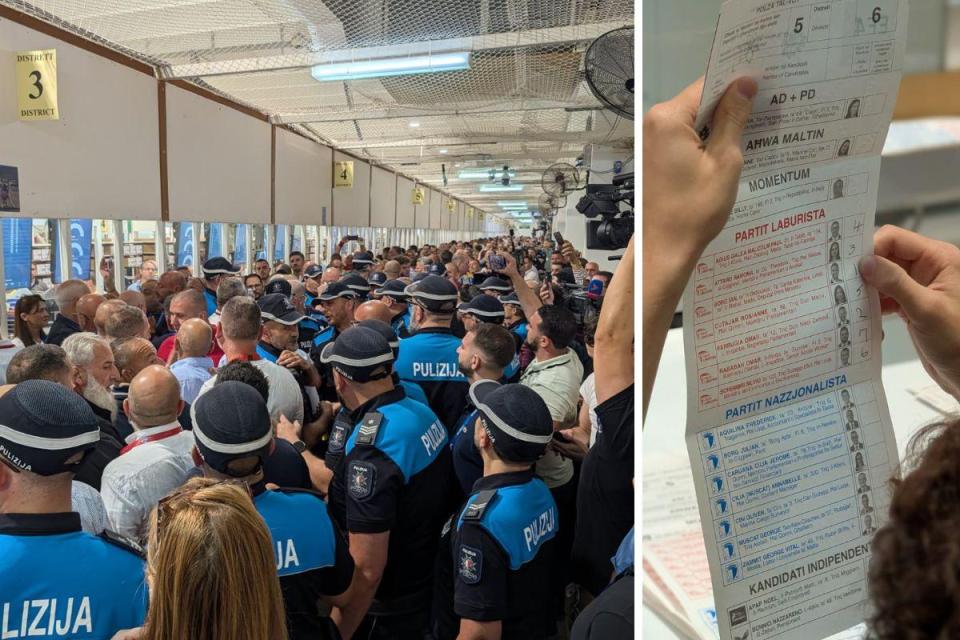
Election Sunday in Malta on May 30, 2026, delivered a snap general election that drew national and international attention as Prime Minister Robert Abela’s Labour Party sought an unprecedented fourth consecutive term in government. Polling stations opened across the archipelago at 7:00 a.m., with more than 341,000 Maltese citizens eligible to vote and ballots cast until 10:00 p.m. The election, called a year ahead of schedule in late April, was framed by Abela as necessary to secure a fresh mandate amid global geopolitical instability, citing the war in Iran, potential energy crises, and rising inflation driven by Middle East tensions and the blockade of the Strait of Hormuz.
From the opening hours, turnout appeared strong. The Electoral Commission reported that voting proceeded smoothly across all 13 electoral districts, with early indications pointing to high participation. By close of polls, the Commission confirmed an approximate turnout of 87.42% of registered voters, with 311,949 of 356,832 electors casting ballots over the four voting days. District-level figures showed consistent engagement, ranging from 81.39% in the 12th district to 89.73% in the 7th district, underscoring the country’s tradition of robust electoral participation even amid voter fatigue concerns after a decade of Labour rule.
The campaign itself was dominated by economic themes. Malta’s economy remains one of the European Union’s best performers, with 4% growth in 2025, low inflation, and virtually no unemployment. Electricity and fuel prices have been frozen for nearly a decade, keeping them the lowest in Europe, a policy Abela touted as evidence of competence and stability. Yet rising rents, overcrowding, infrastructure strain, and pressure on the public health service following a population surge were central to Opposition messaging. Nationalist Party leader Alex Borg, 30, campaigned as a generational change, arguing that economic success had not translated into better quality of life. Borg, a lawyer and former Mr World Malta winner, hoped to become Malta’s youngest-ever prime minister, ending 13 years of Labour governance since 2013.
The political landscape remained a two-party contest, with Labour and the Nationalist Party the only formations to win seats since 1966. Opinion polls throughout May consistently showed Labour ahead, with margins varying from 2.6 points to 12.1 points. MaltaToday’s final poll of 1,382 respondents put Labour at 50.6% to the PN’s 44.2%, while Sagalytics recorded 54.3% for Labour and 42.2% for the PN. Smaller parties including AD+PD, Volt Malta, and others remained below the threshold for parliamentary representation.
Election Sunday also unfolded in the shadow of Malta’s unresolved institutional reckoning. The 2017 assassination of investigative journalist Daphne Caruana Galizia continued to frame debates on governance and impunity. A public inquiry concluded the state bore responsibility for creating an “atmosphere of impunity” that enabled her murder, and in June 2025 two men received life sentences for supplying the car bomb. Though Abela was not in office at the time, the legacy shaped public discourse on corruption, rule of law, and media freedom.
Counting began on Sunday morning, May 31, with preliminary results expected by midday and the official outcome later in the day. Both major parties projected confidence, with Labour seeking to extend its mandate and the PN aiming for an upset. Regardless of the result, Election Sunday confirmed Malta’s enduring high-turnout democratic culture, while spotlighting the policy challenges that will confront the next government: balancing economic growth with quality of life, managing population and infrastructure pressures, and navigating an uncertain international climate that Abela argued justified calling the nation to the polls early.