

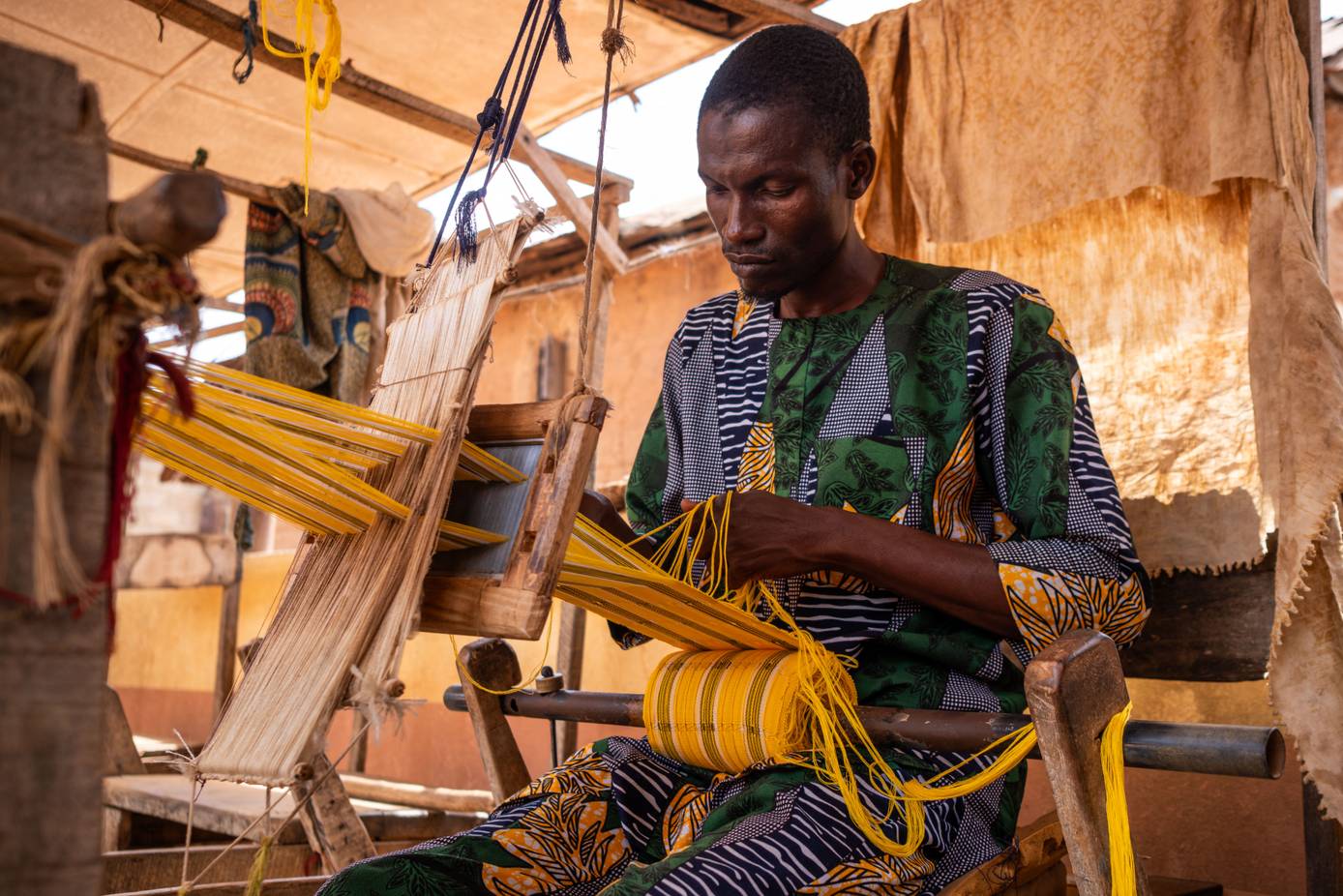
Nigeria’s makers of in-vogue handwoven fabrics are resisting automation to protect the cultural and economic value of their craft. Artisans working with aso-oke, akwaete, and other traditional textiles argue that mechanized production would erode the distinct patterns, irregular textures, and storytelling embedded in each piece, qualities that have made the fabrics sought after in fashion and design. While automation promises faster output and lower costs, weavers say it threatens livelihoods built on specialized skills passed down through generations. Many workshops are instead choosing to scale slowly, training more apprentices and partnering with designers who market the fabrics as premium, handmade products. The stance reflects a broader push to keep heritage techniques central to Nigeria’s growing creative economy rather than trading authenticity for mass production.
Nigeria’s Handwoven Fabric Makers Defend Tradition Against Automation
Share on
Related posts

Being A Teenager In Your 20s
Being a teenager in your 20s feels like living in the space between…

Best Dressed Guests at Malta Fashion Week 2026
The front row and VIP areas at Malta Fashion Week 2026 turned into…

Guess Who? On Fashion’s Ultimate Red Carpet, Stars Hid in Plain Sight 2026
On fashion’s ultimate red carpet at the 2026 Met Gala, stars did the…

Tilda Swinton, Demi Moore and Stella Maxwell: The Best Closing Looks from Cannes Film Festival
The 79th Cannes Film Festival closed on May 23, 2026, with a red…

Ebay Names Trosort Winner of 2026 Circular Fashion Fund
Ebay has named Belgian textile sorting technology company Trosort as the global winner…

Provocation Sells Jeans How Dutch Denim Brands Approach Their Campaigns
Denim advertising has relied on provocation for decades as a way to capture…




Search
About us

MALTA BULLETIN
Discover Latest News, Hot Topics, Politics and Entertainment News With Malta Bulletin